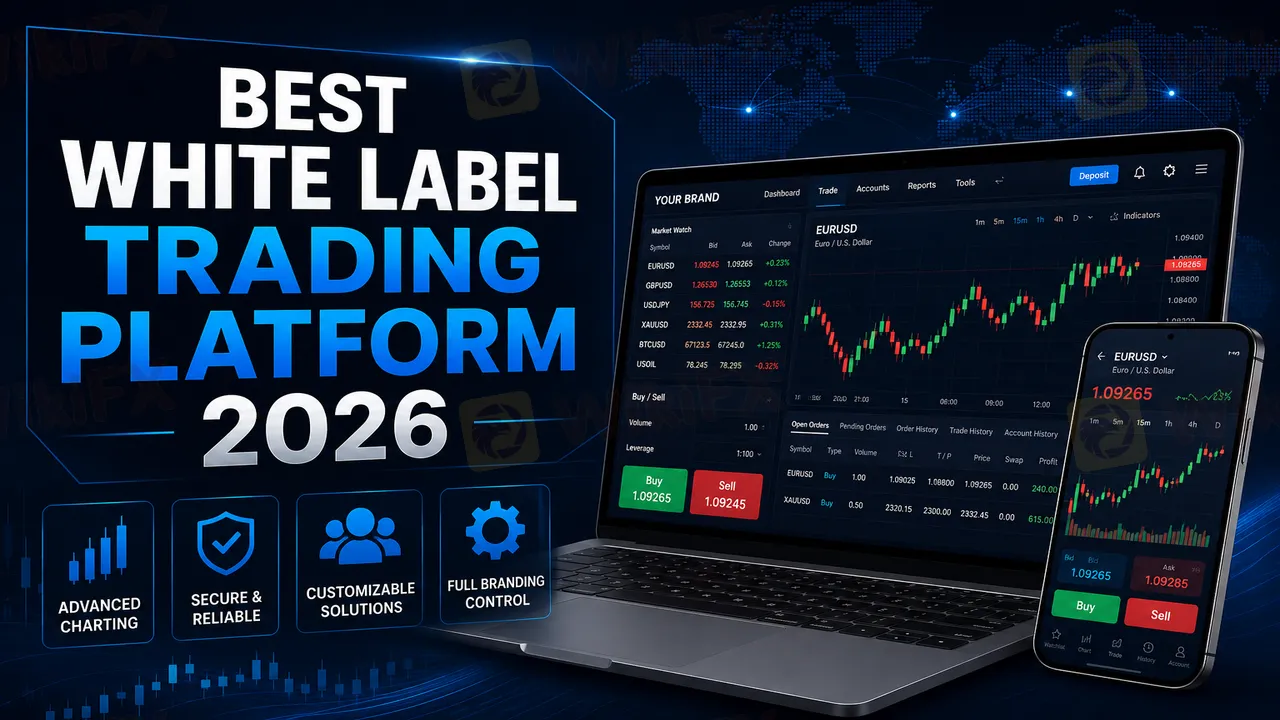
Abstract:The decision to switch white label providers or migrate to a modern white label trading platform is no longer a luxury for growth-minded brokers—it's a strategic necessity for survival in 2026. The convergence of technological stagnation, regulatory evolution, and shifting client expectations has created a perfect storm.
| Executive Summary: 30-Second Read• The Upgrade is Inevitable: In 2026, legacy technical debt (especially MT4) and evolving regulatory pressures (MiFID II, DORA) are forcing established brokers to evaluate new white label trading platform options.• Platforms are Specialized: MT5 remains the multi-asset standard, cTrader dominates the STP/professional segment, Match-Trader is ideal for agile startups and crypto, and DXtrade offers vendor lock-in freedom.• Migration Costs are Hidden: The biggest pitfalls aren't the sticker price but data migration complexity, API integration headaches, and new vendor contract traps that can cripple operations.• Due Diligence is Non-Negotiable: A systematic vendor checklist covering technical SLA, regulatory fit, financial transparency, and support quality is critical before you switch white label provider.• Compliance is Local: For regional expansion, success hinges on the platform's ability to handle data sovereignty laws, local regulatory reporting, and region-specific payment/KYC integrations. |
 Contents
Why Existing Brokers Are Upgrading Their White Label Trading Platform in 2026
The decision to switch white label providers or migrate to a modern white label trading platform is no longer a luxury for growth-minded brokers—it's a strategic necessity for survival in 2026. The convergence of technological stagnation, regulatory evolution, and shifting client expectations has created a perfect storm.

Figure: Modern broker operations depend on an integrated, resilient platform stack.
Technical Debt & The End of Legacy Support
For brokers still operating on MetaTrader 4 (MT4), the clock is ticking loudly. MetaQuotes Software Corp. ceased issuing new white label licenses in 2022[2]. While existing licenses can be transferred, this creates a supply risk and limits long-term planning. Beyond licensing, the platform itself shows its age: limited native support for multi-asset trading beyond Forex/CFDs, cumbersome API integrations for modern CRMs and back-office systems, and a mobile experience that falls short of today's standards. This technical debt translates to higher maintenance costs, slower time-to-market for new features, and an inferior value proposition for clients.
Regulatory Pressure Cooker: MiFID II, DORA & Beyond
The regulatory landscape in 2026 demands more from technology. European brokers face stringent MiFID II requirements for transaction reporting, best execution, and product governance. The Digital Operational Resilience Act (DORA), applicable from January 2025, imposes strict ICT risk management, testing, and reporting obligations on financial entities[27]. A legacy platform may not have the architectural flexibility or reporting modules to comply efficiently, forcing brokers into expensive custom development or manual workarounds. The cost of non-compliance, however, is far greater.
Evolving Client Demand & Competitive Pressure
Today's traders, especially professional and institutional clients, demand transparency, speed, and sophistication. They expect Straight-Through Processing (STP) or Direct Market Access (DMA) execution models, not opaque dealing desks. They require advanced order types, low-latency performance, and access to assets like cryptocurrencies and futures. A broker offering only MT4 with limited assets is increasingly uncompetitive. Furthermore, the rise of neo-brokers and fintech startups using modern, cloud-native platforms raises the user experience bar for everyone.
2026 White Label Trading Platform Comparison: MT5 vs cTrader vs Match-Trader vs DXtrade
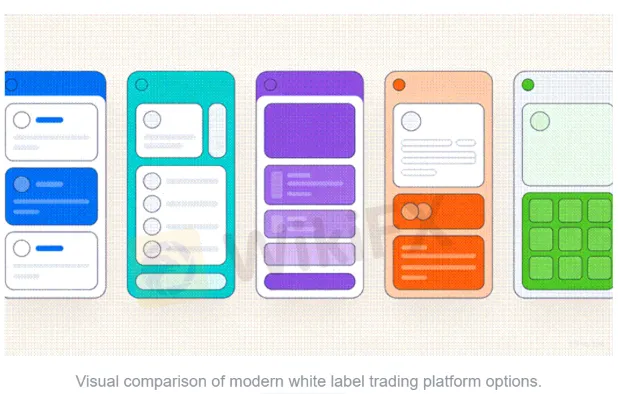
Choosing the right white label trading platform is a strategic decision with multi-year implications. The market has matured, with clear leaders emerging for different broker profiles. The debate is no longer just mt4 vs mt5 white label; it's about selecting a platform that aligns with your business model, target clients, and growth trajectory.
MetaTrader 5 (MT5): The Multi-Asset Incumbent
MetaTrader 5 remains the industry standard for retail and institutional multi-asset brokerage. Its greatest strength is its massive ecosystem: thousands of third-party trading robots (EAs), indicators, and a vast global community of developers and traders.
• Strengths: Unmatched ecosystem, supports Forex, stocks, futures, and CFDs, powerful MetaEditor for algorithmic trading, high global recognition.
• Weaknesses: Significant vendor lock-in with MetaQuotes, customization can be complex and expensive, interface feels dated compared to newer platforms.
• Best For: Established brokers targeting a global retail audience who need a proven, multi-asset solution with extensive third-party tools.
• Regulatory Note: Widely accepted by regulators from CySEC to FSA Seychelles, but brokers must ensure their specific implementation meets local rules.
cTrader: The Professional's Choice for Transparency
Developed by Spotware, cTrader is built from the ground up for transparency and modern execution. It is the platform of choice for brokers promoting STP/DMA models to discerning professional traders.
• Strengths: Clean, intuitive interface, superior depth of market (DOM) display, dedicated cAlgo environment for algorithmic trading, excellent API for integration.
• Weaknesses: Smaller third-party ecosystem than MT5, generally higher cost structure, less brand recognition in certain emerging retail markets.
• Best For: Brokers focusing on professional traders, ECN/STP models, and those in regions like Europe where execution transparency is a key marketing point.
• Regulatory Note: Its transparent architecture is well-regarded by top-tier regulators like the FCA and ASIC.
Match-Trader: The Agile Challenger for Startups & Crypto
Match-Trader has rapidly gained traction as the go-to solution for agile startups and crypto-focused brokers. Its Progressive Web App (PWA) technology eliminates the need for app store downloads, speeding up client onboarding.
• Strengths: Startup-friendly pricing (often low/no setup fee), built-in crypto payment gateways, modern social trading features, fast deployment.
• Weaknesses: Less proven track record with very high-volume institutional clients, brand prestige not yet at the level of MT5/cTrader.
• Best For: New brokerages, firms expanding into cryptocurrency CFDs, and operators targeting regions with high mobile penetration.
• Regulatory Note: Gaining acceptance among offshore regulators like VFSC Vanuatu and FSA Seychelles; suitability for top-tier EU regulation should be verified case-by-case.
DXtrade & The Niche Contenders
• DXtrade (Devexperts): Its key differentiator is an open integration framework designed to avoid vendor lock-in. Brokers can connect their chosen liquidity providers, CRM, and risk tools freely. Ideal for brokers with specific tech stack requirements or those who value maximum flexibility.
• Fortex: An institutional-grade platform trusted by banks and prime brokers. Offers direct liquidity provider connectivity and sophisticated risk management tools.
• Tick-Trader (by Soft-FX): A multi-asset platform known for its customizability and white-label solutions, often bundled with liquidity and back-office services.

Figure: A platform migration requires controlled data transfer, reconciliation, and security controls.
Hidden Costs and Pitfalls of Switching White Label Provider
The advertised setup fee for a new white label trading platform is just the tip of the iceberg. The real challenges—and costs—lie beneath the surface. Underestimating these areas is the most common reason for migration project failure, budget overruns, and client attrition.
The Data Migration Quagmire
Migrating client accounts is not a simple database copy-paste. It involves transferring years of trade history, active orders, custom indicators, client-specific settings, and funding records. Incompatible data formats between old and new platforms can lead to:
• Corrupted or lost historical data, damaging client trust and complicating audit trails.
• Malfunctioning Expert Advisors (EAs) and indicators, as the scripting languages (MQL4 vs MQL5 vs cAlgo) are not compatible. Clients who rely on these automated systems may leave.
• Extended downtime during the cut-over period, resulting in lost trading revenue and frustrated clients.
| Risk Warning: Never assume data migration will be smooth. Insist on a detailed migration plan from your vendor, including a full parallel run where both old and new systems operate simultaneously for a period to verify data integrity and system stability before final switch-over. |
Integration & Compatibility Headaches
Your trading platform does not operate in a vacuum. It must connect seamlessly to your:
• CRM & Client Portal (e.g., B2Core, UpTrader)
• Liquidity Bridge (e.g., PrimeXM, oneZero)
• Payment Processors and KYC providers
• Risk Management and Reporting systems
Each integration point is a potential source of failure. API specifications may differ, requiring costly custom middleware development. Testing these integrations thoroughly adds weeks or months to the timeline. A hidden cost often emerges: needing to upgrade or replace other parts of your tech stack because they are incompatible with the new platform.
The New Vendor Lock-in: Contractual Traps
Escaping one vendor's ecosystem only to get locked into another's unfavorable terms is a real danger. Scrutinize the new contract for:
• Long minimum terms (e.g., 3-5 years) with high early termination fees.
• Minimum monthly revenue commitments that are difficult to meet in the initial post-migration period.
• Opaque fee structures for “additional” services like technical support, platform upgrades, or adding new liquidity providers.
• Lack of data portability clauses, making it difficult to leave them in the future.
Vendor Reliability Assessment: An Actionable Checklist for Brokers

Figure: Vendor selection should combine operational, security, contractual, and integration due diligence.
Selecting a white label trading platform provider is a long-term partnership. Due diligence must move beyond feature lists and sales demos. Use this actionable checklist to systematically evaluate potential partners.
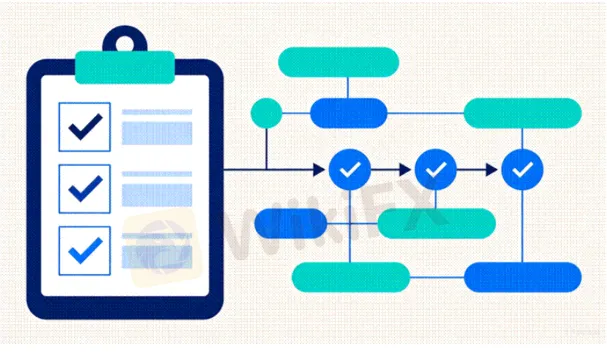
A checklist concept for evaluating and planning a platform migration.
1. Technical & Operational Due Diligence
• Uptime SLA: Do they guarantee 99.5% or higher platform availability? What are the financial penalties for missing it?
• Disaster Recovery: Request details of their data backup frequency, redundant data center locations, and Recovery Time Objective (RTO).
• Security Credentials: Are they certified under standards like ISO 27001? How do they handle penetration testing and security audits?
• API & Documentation: Review their API documentation. Is it comprehensive, well-organized, and includes code samples? A poor API is a red flag for future integration pain.
2. Regulatory & Compliance Verification
• Regulatory Track Record: Ask for a list of existing clients who are regulated by your target authorities (e.g., CySEC, FCA, FSCA South Africa). Contact them for references.
• Compliance Features: Does the platform have built-in tools for MiFID II transaction reporting, DORA-compliant logging, or localized leverage capping as required by ESMA or other regulators?
• Legal Opinion: For critical expansions, consider paying for a legal opinion on whether the platform's architecture and data flows comply with the target jurisdiction's laws.
3. Financial Stability & Contract Scrutiny
• Company Financials: For larger providers, can they share (under NDA) evidence of financial stability? A vendor going out of business is an existential risk.
• Total Cost Breakdown: Get a line-item breakdown of all costs: setup, monthly minimum, per-transaction fees, support costs, upgrade fees.
• Exit Clauses: Negotiate clear terms for data extraction and license termination. Ensure you own your client data and can retrieve it in a standard format.
4. Support & Strategic Partnership Assessment
• Support Response Times: What are their guaranteed response times for P1 (critical) and P2 (major) incidents? Is 24/7 support available?
• Client Success Management: Will you have a dedicated Account Manager or Technical Success Manager?
• Roadmap Alignment: Review their product development roadmap. Do their future plans align with your business strategy (e.g., new asset classes, regulatory features)?
Technical Compliance Requirements for Regional Expansion

Figure: Regional expansion needs jurisdiction-aware infrastructure, reporting, and data controls.
For the regional expander, choosing a white label trading platform is fundamentally about regulatory agility. The platform must be a compliant canvas that can be adapted to the unique legal and technical fabric of each new market.
Data Sovereignty & Localization Laws
Where your client data resides is no longer just an IT decision—it's a legal requirement.
• European Union (GDPR): While not mandating data to stay within the EU, it imposes strict transfer rules. Many brokers opt for EU-based data centers to simplify compliance.
• China, Russia, Turkey: These jurisdictions have strict data localization laws requiring citizen data to be stored on servers within the country. Your platform provider must offer or support deployment in local cloud regions (e.g., Alibaba Cloud in China) or with local hosting partners.
• Other Markets: Countries like Indonesia and Vietnam are implementing similar regulations. Due diligence is required.
Regulatory Reporting Interfaces
Beyond general compliance, some regulators require direct technical integration.
• CySEC (Cyprus): Brokers must report transactions via the CySEC Transaction Reporting System (TRS). The platform should either have a built-in module for this or export data in the exact required XML format.
• FCA (UK): Similar requirements for MiFID II reporting via approved reporting mechanisms.
• FSCA (South Africa): Requires regular reporting of client balances, transactions, and complaints. Automation here is key to reducing operational overhead.
Localized Product & Payment Configuration
The platform must be administratively flexible.
• Leverage & Margin Rules: Ability to easily define different leverage caps (e.g., 100:1 for professional clients, 30:1 for retail) and margin call/liquidation rules per client segment or region.
• Product Restrictions: Enable/disable specific symbols or asset classes (e.g., crypto CFDs) based on local regulations.
• Local Payment Gateways: Pre-integrated support for regional payment methods is a major competitive advantage and reduces time-to-market.
Frequently Asked Questions (FAQs)
Q1: How long does it typically take to migrate from MT4 to a new white label trading platform like MT5 or cTrader?
A full migration project, from signing the contract to having all clients live on the new system, typically takes 3 to 6 months. This includes planning, technical setup, data migration testing, parallel running, and client communication. The mt4 vs mt5 white label migration is particularly complex due to data structure differences. Rushing this process is the biggest cause of problems. A detailed project plan with clear milestones from your vendor is essential.
Q2: What are the most common hidden fees when I switch white label provider?
Beyond the setup and monthly fee, watch out for: Data migration fees (can be $10k+), integration fees for each connector (CRM, payments, liquidity), per-transaction fees that kick in after a certain volume, technical support fees beyond a basic package, and platform upgrade fees for major new versions. Always ask for a Total Cost of Ownership (TCO) projection for the first 3 years.
Q3: Can I run my old MT4 platform and a new platform (e.g., Match-Trader) in parallel during transition?
Yes, and this parallel run is a critical best practice. It allows you to:
• Verify that all client data migrated correctly.
• Test the new platform's performance under real trading conditions.
• Train your support staff without pressure.
• Gradually onboard clients in batches.Ensure your vendor supports this phase technically, as you'll need to synchronize account openings and possibly trades between the two systems temporarily.
Q4: How do I ensure my clients' trading algorithms (EAs) and indicators will work on the new platform?
You cannot guarantee 100% compatibility. MQL4 code (for MT4) does not run on MT5 or cTrader. You must:
1. Audit: Identify which EAs/indicators are most popular among your clients.
2. Communicate Early: Inform affected clients about the migration and the need to update their tools.
3. Provide Resources: Offer a list of recommended developers who can port the code to the new platform's language (MQL5 for MT5, cAlgo for cTrader). Some vendors offer migration tools, but manual review is always needed.
| Final Risk Summary• Platform Risk: A failed migration or choosing an unreliable white label trading platform can lead to extended downtime, loss of client data, and irreparable damage to your brokerage's reputation.• Financial Risk: Underestimating the total cost of migration (including hidden fees and integration work) can strain your capital and threaten business viability.• Regulatory Risk: Deploying a platform that does not meet the technical compliance requirements of your target market can result in heavy fines, license suspension, or inability to operate.• Vendor Lock-in Risk: Entering a long-term contract with unfavorable terms can limit your flexibility and become more costly than the platform you left.Mitigation: Conduct extreme due diligence, plan for a longer timeline and higher budget than initially estimated, always run a parallel operation, and seek independent legal/technical advice for major expansions. |
The search for the best white label trading platform in 2026 is not about finding a one-size-fits-all solution. It is a strategic exercise in aligning technology with business ambition. For the existing broker burdened by legacy systems, it's a path to efficiency and renewed competitiveness. For the regional expander, it's the foundational infrastructure that determines whether a new market can be conquered compliantly and profitably. By understanding the core drivers, meticulously comparing options, planning for hidden complexities, and rigorously vetting partners, brokers can make an informed decision that supports sustainable growth for years to come.
Download the WikiFX app for the latest forex updates.

Interesting Articles for You