


Moneta Markets Receives UAE Category 5 Licence
Moneta Global Financial Services LLC has received a Category 5 licence from the UAE Capital Market Authority, establishing a regulated structure for the company’s activities in the country.
Original

简体中文
繁體中文
English
Pусский
日本語
ภาษาไทย
Tiếng Việt
Bahasa Indonesia
Español
हिन्दी
Filippiiniläinen
Français
Deutsch
Português
Türkçe
한국어
العربية
اردو




Abstract:As macroeconomic uncertainties cause record levels of volatility in China's yuan, investors expect officials to broaden the currency's narrow trading range for the first time since 2014 in order to give market forces more sway.
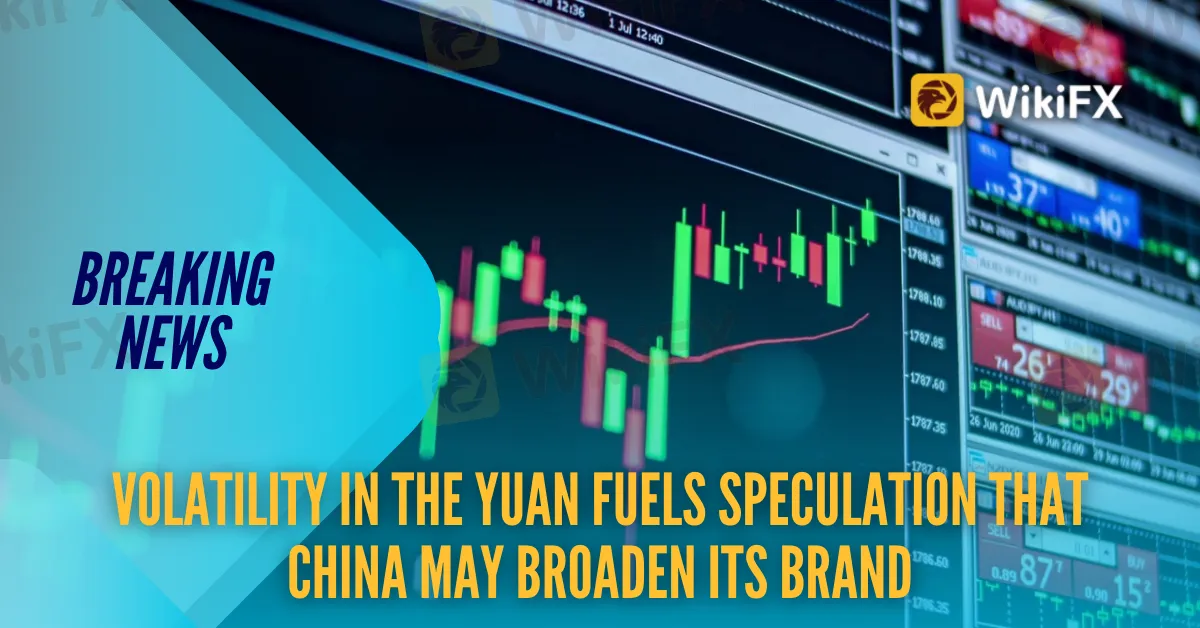
The Chinese yuan is permitted to fluctuate within a 2% range versus the US dollar, centered on the People's Bank of China's daily official midpoint fixing (PBOC).
In the eight years since the band was established, the currency has never moved more than 1% on either side of the midpoint.
In September, an active Federal Reserve and a strong dollar drove the yuan to the lower side of 7 vs the greenback, foreign capital left an economy ailing under regulatory and COVID-19 crackdowns, and the PBOC seemed content to let market forces determine where the yuan should be.
“We envisage the PBOC increasing the yuan's daily trading range versus the dollar to 3% from 2% in 2023, given greater tolerance for heightened market volatility,” said Becky Liu, Standard Chartered Bank's head of China macro strategy.
Day-to-day yuan volatility has reached 16% on certain days in October, compared to a modest 1% to 4% range in previous months and years. In five of the 16 trading days in October, the currency came dangerously close to reaching the lower end of the band.
Implied volatility, a measure of future volatility in the options market, has risen. According to one options trader, the market is experiencing “long volatility.”
One-, three-, and six-month yuan implied volatility have reached all-time highs, while nine-month and one-year tenors have reached their highest levels since Beijing's currency changes in 2015 when it implemented a one-time 2% devaluation.
In 2014, the PBOC raised the currency's daily trading range to 2% in what some market players claimed was an effort to bring the yuan into the IMF's currency basket. It was added in 2016.
Policymakers, according to Reuters, have contemplated broadening the trading band in recent years to demonstrate their commitment to long-term market changes.
“If the PBOC wants to widen the trading band, it will most likely happen in the latter half of 2023, when the economy begins to recover visibly, and interest rate differentials with the US may also begin to shrink meaningfully to favor the renminbi,” said Tommy Wu, senior China economist at Commerzbank.
The PBOC did not reply to a request for comment on market expectations from Reuters.
The PBOC pledged in its most recent quarterly monetary policy implementation report to “enable markets to play a crucial role in establishing the currency rate.”
China's yuan has fallen roughly 11% versus the dollar so far this year, on track to be the worst annual loss since 1994, but global investment banks predict it to gradually rebound in 2023.
Earlier this year, rising volatility in yuan-rouble trading caused the central bank to quadruple the pair's trading band to 10% in March.
However, most experts who believe a band widening is due do not believe it is imminent.
“The band widening is unlikely to occur until it is obvious that the US dollar's cyclical advance has crested,” said Alvin Tan, head of Asia FX at RBC Capital Markets.
“The PBOC probably needs to realize that the Fed's rate hike cycle has come to an end.”
(Winni Zhou, Zhang Jindong, and Brenda Goh contributed reporting, while Vidya Ranganathan and Simon Cameron-Moore edited the piece.)
Stay tuned for more Forex News.
Download the WikiFX App from the App Store or Google Play Store to stay updated on the latest news.

Disclaimer:
The views in this article only represent the author's personal views, and do not constitute investment advice on this platform. This platform does not guarantee the accuracy, completeness and timeliness of the information in the article, and will not be liable for any loss caused by the use of or reliance on the information in the article.

Moneta Global Financial Services LLC has received a Category 5 licence from the UAE Capital Market Authority, establishing a regulated structure for the company’s activities in the country.
Did LMAX Group deny you withdrawals citing frozen funds at the wallet service provider’s end? Have you been so exhausted by the endless withdrawal hassles that you have begun to stop investing in the platform? Has this UK-based liquidity provider even questioned your fund ownership status when you requested withdrawals? You are not alone! Many users have complained about these issues while sharing their LMAX Group reviews.

A fresh Pune police probe has reportedly booked 57 people in connection with an alleged forex investment scam involving a trading platform. This India-focused report separates the allegation from confirmed regulatory rules, explains how fake trading app scams use social media, fabricated profits, third-party bank accounts and blocked withdrawals, and shows how investors can verify an online forex trading platform through RBI and SEBI resources. It also places the case within Pune's wider pattern of online investment fraud and provides an immediate response checklist, including the National Cyber Crime Reporting Portal and helpline 1930.
A TickTrader white label can look like the fastest route to a modern branded trading environment, but a fast launch is not the same as a controlled launch. This 2026 broker guide explains what the TickTrader platform is, where a Soft-FX broker solution can sit in a wider operating stack, and how to evaluate the difference between a white label, a server licence, and a connected CRM or Client Office setup. It also unpacks TickTrader cost beyond the monthly headline, including implementation, integration, support, data, governance, migration, and exit assumptions. Use the practical questions, workflow tests, comparison table, and launch checklist to assess a Soft-FX TickTrader provider without mistaking a feature demo for evidence that your brokerage can run the service safely at scale.
WikiFXWikiFXWikiFXWikiFXWikiFXWikiFXWikiFXWikiFXWikiFXWikiFX