

Global Broker Regulation Inquiry App
About WikiFX
English
简体中文
繁體中文
English
Pусский
日本語
ภาษาไทย
Tiếng Việt
Bahasa Indonesia
Español
हिन्दी
Filippiiniläinen
Français
Deutsch
Português
Türkçe
한국어
العربية
اردو


Why That FCA Regulation Logo Might Not Protect You

WikiFX
|


Abstract:A clear breakdown of why seeing a regulatory logo on a broker's website does not guarantee fund safety. Learn how to distinguish between basic and full licenses, understand segregated accounts, and know what evidence to save if you encounter a scam.
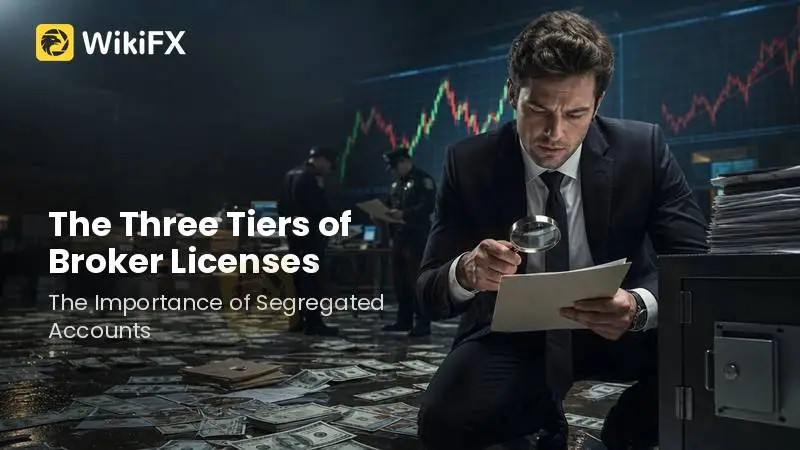
Many new traders in Malaysia look for a regulatory logo on a broker's website, spot a familiar acronym, and immediately assume their money is safe. But regulation is not a simple yes-or-no question. Just because a platform claims to be regulated by a major authority does not mean your funds are fully protected.
Let's look at the UK's Financial Conduct Authority (FCA), which is widely considered one of the strictest financial watchdogs globally. Beginners often see an FCA registration number on a broker's homepage and stop checking. However, there are actually three distinct types of FCA licenses, and they offer very different levels of protection for retail traders.
 Contents
The Three Tiers of Broker Licenses
To understand how safe your money is, you have to look at the exact permissions the broker holds.
The EU Passport (EEA Authorised)
Under older cross-border rules, a broker regulated in a smaller European country (like Cyprus) could register to accept UK clients. On the official register, this shows up as “EEA Authorised.” This is the weakest form of registration. The firm is not directly regulated by the FCA's strict standards, and crucially, this status usually means they are “unable to hold client money” under UK protection frameworks.
The Basic License
This license is often issued to “white label” brokers—smaller companies that essentially rent their trading software and liquidity from larger firms. While they meet basic compliance standards, they are usually strictly labeled as unable to hold client money. Most importantly, traders under this license cannot claim compensation from the Financial Services Compensation Scheme (FSCS) if the broker goes bankrupt.
The Full License
This is the real deal. Brokers with a full license must pass strict audits, maintain a physical office, and hold millions in capital reserves. On the register, it will clearly state they are “able to hold client money.” Only retail traders operating under this specific license are fully protected by the FSCS safety net.
The Importance of Segregated Accounts
The main reason you need to check these license details is to ensure the broker uses segregated accounts.
When an account is segregated, it means the broker keeps your trading deposit in a separate bank facility from their own operational corporate funds. If an unregulated or poorly regulated broker does not separate these funds, your money could be used to pay their office rent, marketing costs, or employee salaries. If the company collapses, your funds disappear with them. A full regulatory license strictly enforces this separation, ensuring your capital remains yours.
Handling the Worst-Case Scenario
Even with careful checks, some beginners end up tricked by fake platforms that refuse withdrawals. The typical pattern involves suddenly freezing funds, blaming “system upgrades,” or asking for a “margin tax” to release your money.
If you realize you are trapped in a scam platform, time is critical. Do not panic and do not confront the scammers immediately, as they will simply delete your account and disappear.
First, gather and save all your evidence. Take clear screenshots of your trading history, deposit records, and bank transfers. Most importantly, save the chat logs with the agents, analysts, or social media connections who introduced you to the platform. These chat logs are vital to prove the step-by-step fraud process. Once your evidence is fully backed up, report the issue to local authorities. Recovering funds is difficult, but having a complete chain of evidence is your best possible chance.
Choosing a broker is your first and most important trade. Do not just look at the logos plastered at the bottom of a website. Dig into the specific permissions that license actually grants. Before you deposit a single Ringgit, use a background-checking tool like WikiFX to verify the broker's exact license type, check if they are legally permitted to hold client money, and confirm their reputation in the market.

Disclaimer:
The views in this article only represent the author's personal views, and do not constitute investment advice on this platform. This platform does not guarantee the accuracy, completeness and timeliness of the information in the article, and will not be liable for any loss caused by the use of or reliance on the information in the article.
WikiFX Broker
Latest News
She Loses RM622,320 After Falling for a Fake Online Stock Investment Scheme
WikiFXRinggit Gains vs Majors, Slips vs Dollar in Recurring Trend
WikiFXCourt Ends 28-Year Sh185.5m Battle Against CBK
WikiFXSTMARKET Review: A Cambodia SERC License and a $3,250 Withdrawal That Went Missing
WikiFXEmiraX Markets Review: No Regulatory Information Found , Accounts Suspended When Traders Try to Withdraw
WikiFXIs Gold Still a Safe Haven in 2026?
WikiFXG4Trade Review 2026: Unverified Regulation and Withdrawal Concerns
WikiFXWhy You Can’t Generalise Forex Regulation Across Africa
WikiFXXM Opens Gold Trading Through the Weekend with GOLD24-7
WikiFXForex CRM Software in 2026: How to Choose the Operational Backbone Your Brokerage Can Actually Run o
WikiFX