

Global Broker Regulation Inquiry App
About WikiFX
English
简体中文
繁體中文
English
Pусский
日本語
ภาษาไทย
Tiếng Việt
Bahasa Indonesia
Español
हिन्दी
Filippiiniläinen
Français
Deutsch
Português
Türkçe
한국어
العربية
اردو
UK Sanctions Target Prince Group Network: Fraud Links, Crypto Laundering and Global Crackdown
Abstract:The United Kingdom has launched a new wave of sanctions targeting individuals and entities allegedly involved in a sprawling transnational fraud and money laundering network linked to Prince Group.
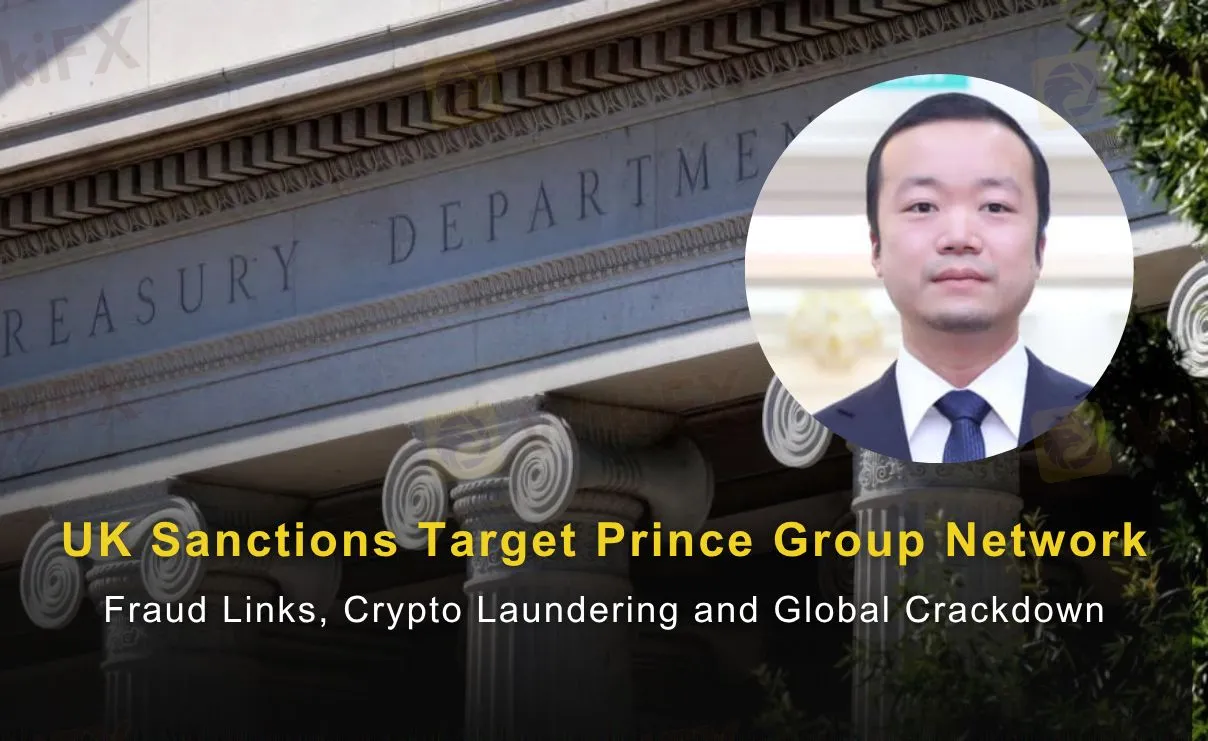
The United Kingdom has launched a new wave of sanctions targeting individuals and entities allegedly involved in a sprawling transnational fraud and money laundering network.
The latest measures affect four organisations and six individuals believed to play key roles in facilitating illicit financial flows across borders. Several of those named are suspected of having close ties to networks associated with the Prince Group, a major Cambodian conglomerate founded by Chen.
Key Figure: Li Tian and the Global Financial Network
At the centre of the sanctions is Li Tian, identified by UK authorities as a senior figure within the groups financial operations. He is widely regarded as a core member responsible for managing an extensive international network that spans multiple jurisdictions, including Taiwan.
His background illustrates the increasingly sophisticated structure of modern financial crime. Originally from China, Li is reported to hold multiple passports, including those issued by Cambodia, Cyprus, Saint Kitts and Nevis, Saint Lucia and Vanuatu. This web of national affiliations is believed to have enabled greater mobility and operational secrecy, making regulatory oversight significantly more difficult.
From Organised Crime to Scam Hubs: Wan Kuok-koi‘s Alleged Role
Another high-profile figure named in the sanctions is Wan Kuok-koi, also known as “Broken Tooth”. Once a prominent leader within Macau’s triad circles, Wan has long been associated with organised crime in the region.
UK authorities allege that he is linked to the development of the notorious “KK Park” in Myanmar. This site has been widely reported as a major hub for online scam operations, forming part of a broader network of fraud centres across Southeast Asia. These facilities have drawn increasing international concern due to their connections with human trafficking and forced labour.
Inner Circle Operatives and Hidden Influence
The sanctions list also includes Hu Xiaowei, believed to be a key behind-the-scenes figure within the network. Industry sources suggest he has played an important coordinating role and is considered a trusted associate within Chens inner circle.
Wang Xiaoyan has also been named due to her links to senior network member Zhu Zhongbiao, who was previously sanctioned by both the UK and the United States. Wang is reported to have established business operations in the UK and used a locally registered company to acquire high-value property in London. These assets are now likely to face closer examination as part of ongoing investigations.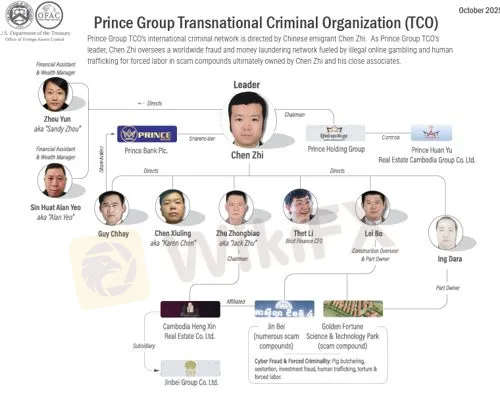
Cambodian Links and Expanding Corporate Structures
The sanctions extend to individuals connected to Cambodia, including Soklim Eang and Pang Weizhi. Pang, originally from Chinas Zhejiang province, has since acquired Cambodian citizenship and currently serves as a director of Tian Xu International Technology.
UK investigators believe the company maintains business ties with the Prince Group network, raising concerns about its potential role in facilitating financial transactions within the broader operation.
Companies Under Scrutiny: Financial Channels and Infrastructure
Corporate entities have become a central focus of the latest sanctions. Tian Xu International Technology and Bsquare Technology, both based in Cambodia, have been targeted due to their alleged connections to the network.
Authorities suspect these firms may have provided critical infrastructure or financial channels that enabled the movement of illicit funds. Their inclusion highlights how legitimate-looking businesses can be used to mask complex financial crime activities.
Cryptocurrency Platforms and Digital Laundering Risks
Further scrutiny has been directed at BYEX, a cryptocurrency exchange previously sanctioned by the UK. The platform was accused of facilitating large-scale money laundering and ceased operations after being blacklisted.
Its reappearance in the latest announcement underscores ongoing concerns about the role of digital asset platforms in enabling financial crime. As cryptocurrencies become more widely adopted, regulators face increasing challenges in monitoring and controlling their misuse.
Additional entities, including Cambodia-based Legend Innovation and the digital black-market platform Xinbi, have also been sanctioned. Investigators believe these organisations may have supported the network by providing technical infrastructure or assisting in fund transfers.
A Broader Crackdown on Global Financial Crime
The UK government has stated that the primary aim of these sanctions is to disrupt the financial lifelines of transnational scam networks. By restricting access to financial systems and freezing assets, authorities seek to weaken operational capabilities and deter further criminal activity.
This move reflects a wider shift in global enforcement strategies. Increasingly, governments are targeting not only individuals but also the corporate and technological ecosystems that sustain illicit operations. The growing use of cryptocurrency, offshore entities and layered ownership structures has made these networks more resilient, but also more exposed to coordinated international investigations.
Rising Risks for Global Investors
For the global financial and trading community, the implications are immediate. The case highlights the risks associated with opaque corporate structures and reinforces the need for stronger due diligence, particularly in emerging markets.
Financial institutions and investors are being urged to reassess their exposure to entities operating in high-risk jurisdictions. The intersection of legitimate business and illicit finance presents a growing challenge that cannot be ignored.
Enforcement Intensifies as Investigations Continue
The sanctions send a clear signal that tolerance for large-scale financial crime is rapidly diminishing. As investigations progress and international cooperation strengthens, further individuals and organisations could soon be added to the list.
With billions of dollars potentially flowing through these networks, the urgency of enforcement efforts continues to grow. The UKs latest action may represent only the beginning of a broader global push to dismantle the infrastructure behind modern financial crime.

Disclaimer:
The views in this article only represent the author's personal views, and do not constitute investment advice on this platform. This platform does not guarantee the accuracy, completeness and timeliness of the information in the article, and will not be liable for any loss caused by the use of or reliance on the information in the article.
WikiFX Broker
Latest News
trading.com Review 2026: Regulation, MT5 Access, and Complaint Signals
 WikiFX
Behind The Screenshots: The Forex Success You See Online May Not Be Real
WikiFXThe NFP Gap Slippage: Why Your 1.1000 Stop Executed at 1.0950
WikiFXFBS Review 2026: Complaints, Withdrawals, and Risk Signals
WikiFXDollar Gains While Yen Finds Support
WikiFXDollar Advances on Middle East Conflict
WikiFXThe 3-Bullet Rule: How a Paper Card Stops Overtrading
WikiFXVALUTRADES Review 2026: Slippage Complaints, Regulation, and Safety Risks
WikiFXQuotex Review 2026: Official Warnings, Blocked Accounts, and High Risk
WikiFXAxim Trade Review: Withdrawal Alarms, Weak Regulation, and a Broker Risk Traders Cannot Ignore
WikiFX