Abstract:A factory supervisor lost RM668,800 after falling for a fake share investment scheme that used fabricated profits on a cloned trading app to gain his trust, before blocking withdrawals and disappearing with the funds.
A factory supervisor has lost RM668,800 after being duped by a fake share investment scheme that promised quick and guaranteed returns, police said.
The 65-year-old man lodged a police report yesterday, explaining that he was attracted by an online investment offer claiming it could generate returns of up to 20 per cent within 24 hours. According to police, the syndicate convinced him to invest through what appeared to be a legitimate share trading platform.
To gain his trust, the victim first invested small sums and saw profits credited almost immediately. These early payouts gave him the impression that the scheme was genuine. Encouraged by the fast returns, he gradually increased his investment, unaware that the initial “profits” were merely used as bait to lure him further.
Between Nov 28 last year and Jan 6, the man made 25 separate transactions amounting to RM668,800, transferring money into 17 different bank accounts provided by the syndicate.
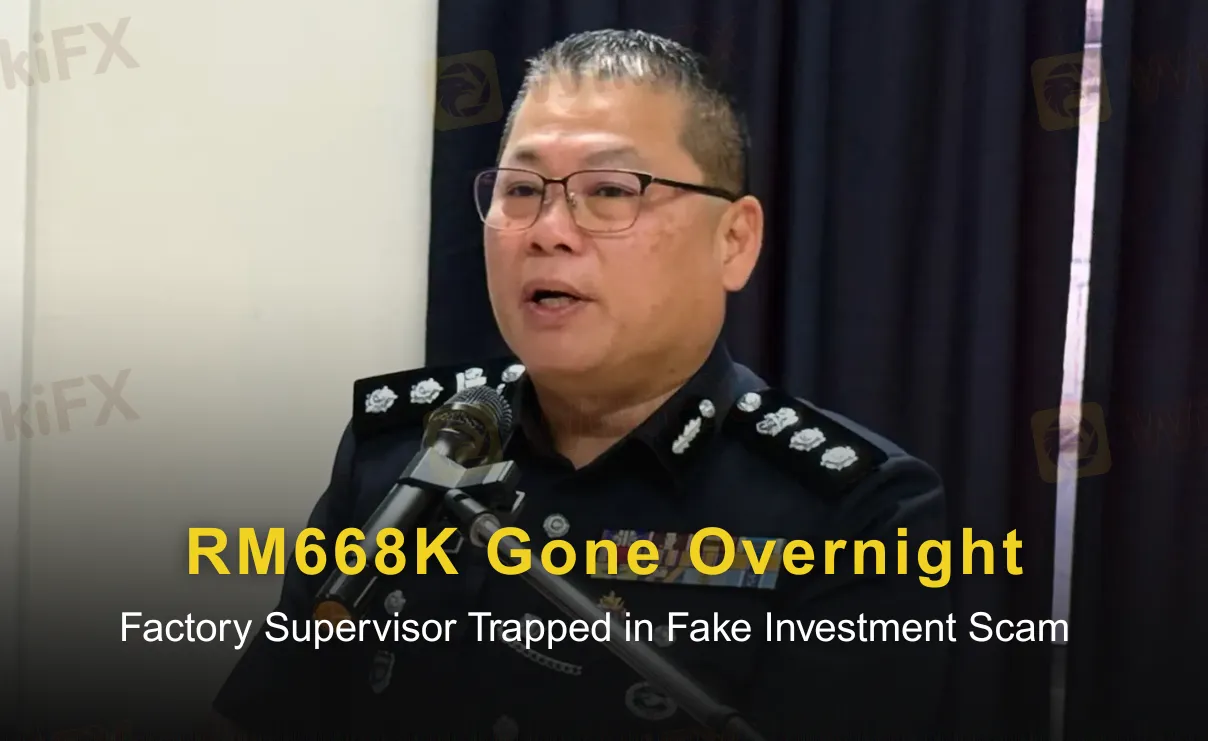
District police chief Assistant Commissioner Tan Seng Lee said the victim was told that all profits would be reflected in his “JBS Shop” application account. The platforms professional-looking interface further convinced him that the investment was legitimate.
However, investigations later revealed that JBS Shop is not a recognised or regulated investment platform. Police believe it to be a fake or cloned application controlled by scam syndicates to simulate trading activity and display fabricated profits.
According to Tan, the victims JBS Shop account later showed supposed profits of USD102,303.64. But when he tried to withdraw the money, his account was suddenly blocked. It was then that he realised he had been cheated and decided to lodge a police report.
The case is being investigated under Section 420 of the Penal Code for cheating involving a non-existent investment. If convicted, those responsible face between one and 10 years in prison, whipping and a possible fine.
Tan advised the public to remain cautious when approached with investment offers, reminding that promises of high returns within a short period are a classic sign of scams.