

Global Broker Regulation Inquiry App
About WikiFX
English
简体中文
繁體中文
English
Pусский
日本語
ภาษาไทย
Tiếng Việt
Bahasa Indonesia
Español
हिन्दी
Filippiiniläinen
Français
Deutsch
Português
Türkçe
한국어
العربية
اردو


CONSOB Blackout: New Wave of Unauthorized Investment Scams Hidden Behind .it Domains

WikiFX
|


Abstract:CONSOB has blocked 11 new abusive financial websites, identifying a dangerous trend of unregulated schemes using .it domains to fool investors. See the full blacklist and learn how to protect your funds.
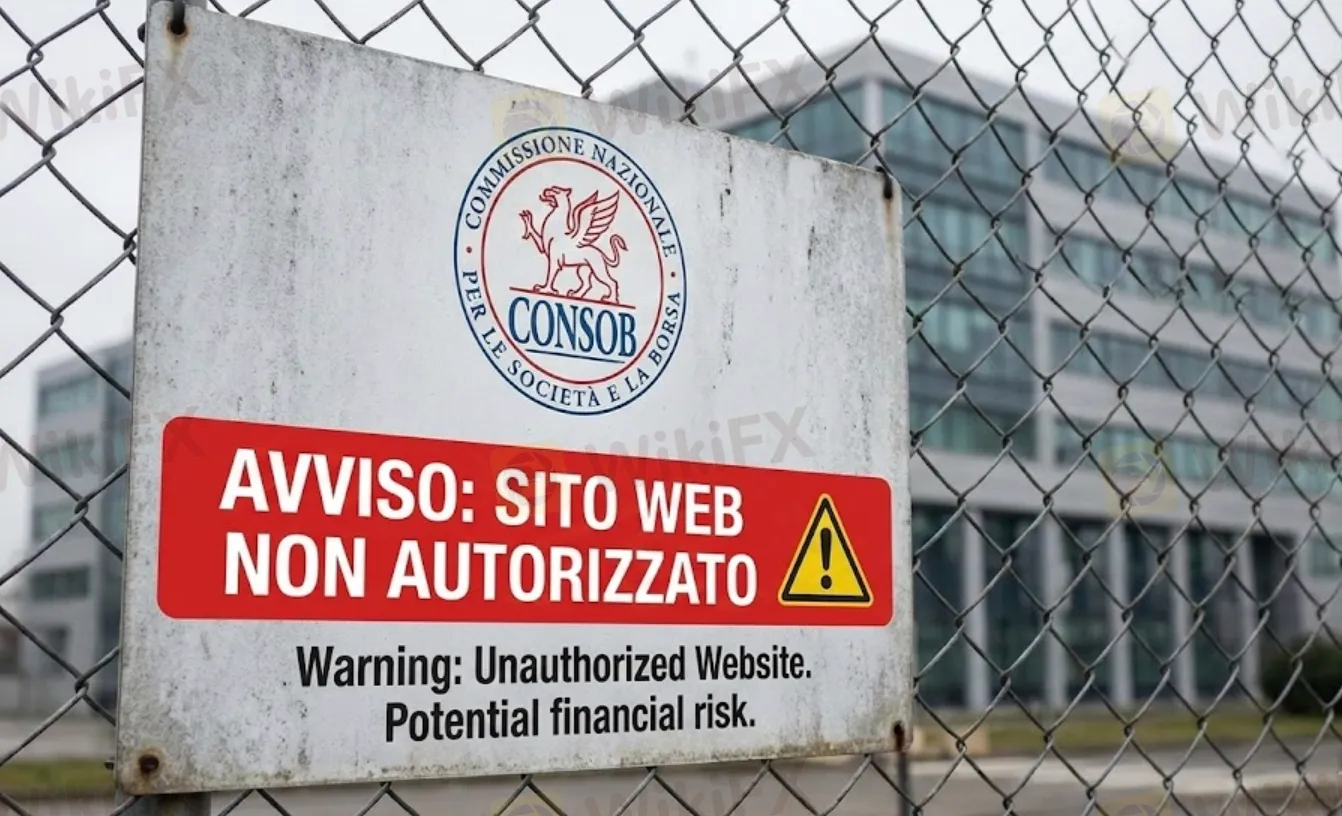
Italys financial watchdog, CONSOB, has struck another blow against online investment fraud. In its latest enforcement operation, the regulator ordered the blackout of 11 new websites that were illegally offering financial services and investment products to the public without authorization.
This latest action brings the total number of blocked domains to over 2,270 since the authority began its crackdown. However, this specific batch of shutdowns reveals a concerning new strategy employed by fraudsters: the mass usage of local .it domains to feign legitimacy.
 Contents
The “.it” Trap: A Coordinated Network?
Analysis of the newly blacklisted sites reveals a striking pattern. Nearly all of the blocked platforms utilize the .it top-level domain (Italy's country code). By using a local domain extension, these unregulated entities attempt to create a false sense of security for Italian savers, appearing as “homegrown” or authorized local platforms.
The sites also share a suspicious similarity in naming conventions—often consisting of random alphanumeric codes (e.g., “RYE036”, “03WAKIH”)—and appear to rely on identical or highly similar web templates. This suggests they are likely part of a coordinated “clone” network, where fraudsters mass-produce cheap, identical websites to cast a wide net for victims seeking online trading opportunities.
The New Blacklist
Investors are urged to check their browser history and avoid the following domains immediately. These sites have been officially flagged for abusive financial activity:
- Praxiscarma s.a. (www.praxiscarma.com)
- “RYE036” (https://rye026.it)
- “RYE326” (https://rye326.it)
- “03WAKIH” (https://03wakih.it)
- “SJCJ11” (https://sjcj11.it)
- “01LUHAR” (https://01luhar.it)
- “GKJ159” (https://gkj159.it)
- “DSHS82” (https://dshs82.it)
- “GFJ123” (https://gfj123.it)
- “L88159” (https://l88159.it)
- “FGJ329” (https://fgj329.it)
Empowered by the “Growth Decree”
CONSOBs ability to act swiftly against these threats is bolstered by the “Growth Decree” (Decreto crescita). This legislation grants the authority the power to order internet service providers (ISPs) to completely restrict access to the websites of abusive financial intermediaries operating without proper licensing.
While ISPs work to implement these blocks, there may be a technical delay of a few days. During this window, the sites may remain visible, making individual vigilance critical.
How to Verify Before You Invest
The rise of “template scams”—where hundreds of sites look identical but carry different names—makes due diligence harder than ever.
CONSOB reminds investors that “common sense” is the first line of defense. Before transferring funds to any platform—especially those with nonsensical names or generic designs—verify their status.
Steps to Safety:
- Check the Authorization: Ensure the operator is listed on the official registers of authorized investment firms.
- Verify the Prospectus: For financial products, a valid prospectus must be published and approved by the regulator.
- Use Verification Tools: Platforms like WikiFX can help you instantly cross-reference a broker's regulatory status and view complaints from other users.
If you encounter a broker operating from a .it domain that is not on the official authorized list, it is highly likely a scam designed to exploit local trust.
Disclaimer:
The views in this article only represent the author's personal views, and do not constitute investment advice on this platform. This platform does not guarantee the accuracy, completeness and timeliness of the information in the article, and will not be liable for any loss caused by the use of or reliance on the information in the article.
WikiFX Broker
Latest News
BROKSTOCK Review: What Traders Should Know Before Depositing
WikiFXDarwinex Review: Regulated but Office Not Found with Trader Complaints?
WikiFXRBI Ends Deposit Rate Discrimination Between Branches
WikiFXWhy Do Forex Brokers Show Different USD/MYR Quotes?
WikiFXOROKU EDGE Review: Blacklisted by SCM Malaysia and Users Report Frozen Funds
WikiFXStill Trusting Telegram Signals? This Is Why You Are Still Not a Profitable Trader
WikiFXAs Warsh‘s Fed faces pressure to act on inflation, these indicators show it’s at its lowest in years
WikiFXVAULT MARKETS Review: Is Your Deposit Safe?
WikiFXFONDEX Review 2026: Things FONDEX Broker Might Not Want You To See
WikiFXChasing Price: The Psychology That Sinks New Forex Traders
WikiFX