


Vietnam Becomes New Base for Cross Border Scam Syndicates After Cambodia Crackdown
Cross border scam syndicates are constantly adapting to evade law enforcement by moving from Cambodia to Vietnam.
Original

简体中文
繁體中文
English
Pусский
日本語
ภาษาไทย
Tiếng Việt
Bahasa Indonesia
Español
हिन्दी
Filippiiniläinen
Français
Deutsch
Português
Türkçe
한국어
العربية
اردو




Abstract:An elderly man has lost RM659,000 to a fraudulent online investment scheme that spread through WhatsApp, in yet another reminder of the growing threat of social media investment scams in Malaysia.

An elderly man has lost RM659,000 to a fraudulent online investment scheme that spread through WhatsApp, in yet another reminder of the growing threat of social media investment scams in Malaysia.
According to Brickfields District Police Chief Assistant Commissioner Hoo Chang Hook, the victims ordeal began when his phone number was added to an investment-related WhatsApp group on 12 September. The group appeared legitimate, filled with discussions about financial opportunities and claims of high-profit returns.
Within days, the man was approached by an individual offering him a chance to participate in what was described as an “off-market” investment. The offer came with the usual promise of quick and substantial returns, a common tactic used by scam networks to create a false sense of urgency and exclusivity.
Convinced by the sales pitch, the victim made eight transactions between 7 and 29 October, transferring a total of RM659,000 into two local bank accounts controlled by the scammers. The funds were purportedly meant for investment purposes, but none of the promised profits ever materialised.
It was only after repeated failed attempts to withdraw his supposed earnings that the victim realised he had been cheated. He then lodged a police report, and the case is now being investigated under Sections 420 and 424 of the Penal Code, which deal with cheating and dishonest concealment of property.
Assistant Commissioner Hoo confirmed that the police are actively tracking down those responsible. He also used the opportunity to remind the public of the escalating number of scams operating through online messaging platforms and social media, noting that scammers often pose as investment brokers or agents of financial institutions.
He warned that Malaysians should be especially cautious when approached with online investment offers that promise unusually high profits or “guaranteed” returns. Such schemes, he explained, are rarely backed by real financial operations and often use fabricated screenshots or testimonials to appear convincing.
Hoo urged members of the public to verify the legitimacy of any investment company before parting with their money. Official checks can be done through Bank Negara Malaysia‘s (BNM) and the Securities Commission’s (SC) websites, where lists of licensed financial service providers are publicly available.
He further cautioned against sharing personal or banking information with unknown parties, as scammers frequently use this data for identity theft or further fraud.
Online investment scams have become increasingly sophisticated in Malaysia, with fraudsters adapting to trends in digital finance and exploiting public interest in high-yield opportunities. Many victims, including professionals and retirees, have lost their savings to similar schemes circulating on platforms such as Facebook, Telegram, and WhatsApp.

Disclaimer:
The views in this article only represent the author's personal views, and do not constitute investment advice on this platform. This platform does not guarantee the accuracy, completeness and timeliness of the information in the article, and will not be liable for any loss caused by the use of or reliance on the information in the article.

Cross border scam syndicates are constantly adapting to evade law enforcement by moving from Cambodia to Vietnam.
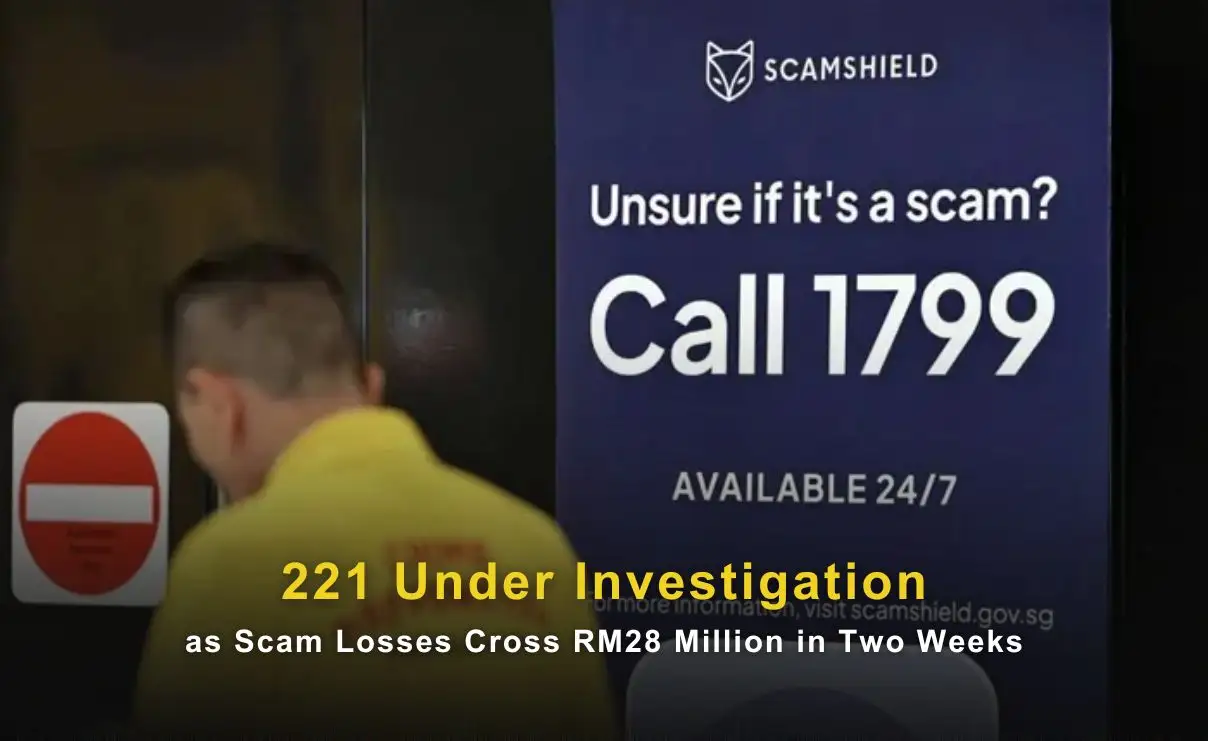
Singapore authorities have concluded a major anti-scam enforcement operation that resulted in 221 individuals being placed under investigation for their alleged roles in a wide range of fraudulent schemes.

Malaysia may be emerging as a new destination for transnational scam syndicates seeking to evade mounting pressure from international law enforcement agencies, according to a leading humanitarian organisation.

He Claimed Elite Connections. She Ended Up Losing Millions and Her Dream Car
WikiFXWikiFXWikiFXWikiFXWikiFXWikiFXWikiFXWikiFXWikiFXWikiFX