Abstract:In response to intensifying global competition and pressure from a strengthening New Taiwan dollar, TSMC has announced a massive $10 billion capital injection into its overseas subsidiary. This marks the company’s largest capital operation ever to manage foreign exchange risks and enhance financial flexibility.
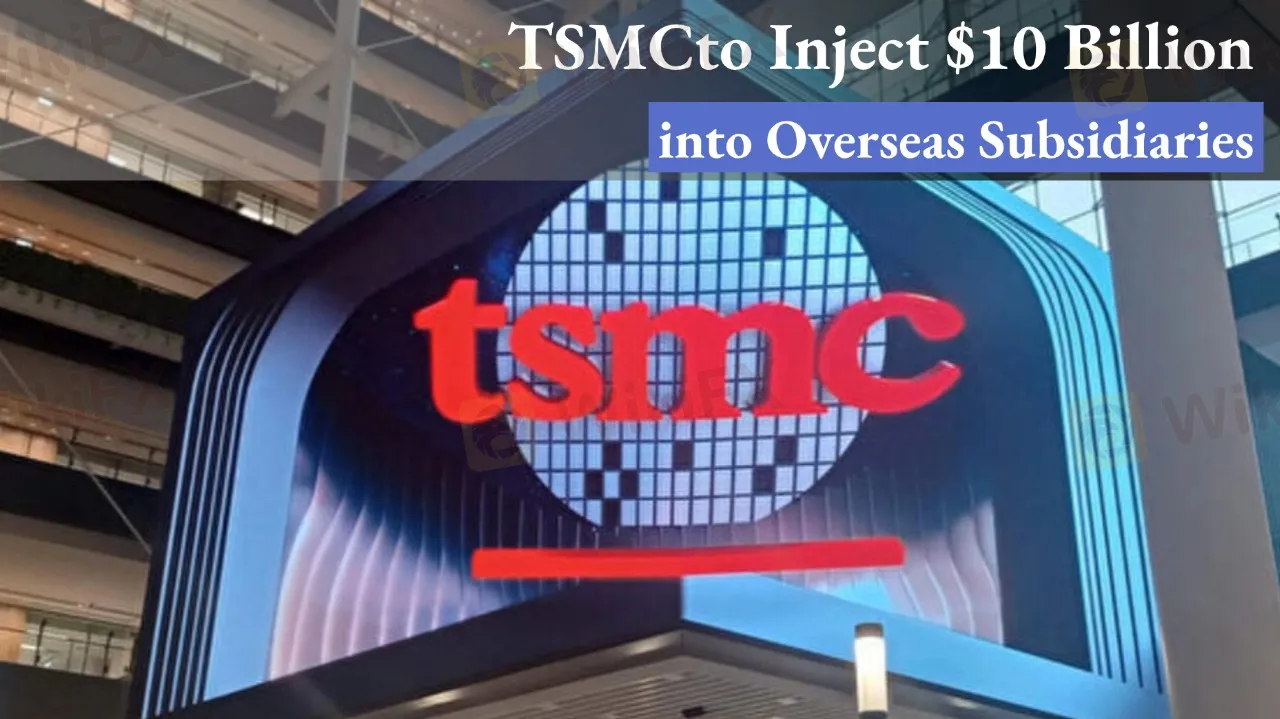
Taiwan Semiconductor Manufacturing Company (TSMC), the world‘s largest contract chipmaker, has approved a $10 billion capital injection into its fully owned overseas unit, TSMC Global Ltd. This move, done through a new share issuance, aims to improve the group’s ability to manage currency risks while ensuring capital flexibility.
According to Taiwan's Investment Commission, the funds will be allocated for general investments such as bank deposits and bonds. TSMC intends to shift its foreign exchange holdings from the parent company to the subsidiary to reduce hedging costs and better manage its FX exposure.
This is the third time in 2024 that TSMC has increased capital for TSMC Global Ltd., though the previous two rounds were much smaller in scale. All injections occurred during periods when the New Taiwan dollar (NTD) faced appreciation pressure, indicating TSMCs strategic sensitivity to currency fluctuations.
NTD Strength Pressures Exporters
A major reason for the capital injection is the NTDs strong rally in recent months. In May, the currency recorded its largest single-day gain since the 1980s. One-year implied FX volatility has surged to its highest level since 2011, reflecting growing concerns over market instability.
For export-oriented firms, a stronger local currency reduces revenue when converted from dollars to NTD, or forces them to raise overseas prices—risking lower demand. As a key supplier to Apple and NVIDIA, TSMC is particularly exposed. CEO C.C. Wei recently warned that the stronger NTD has shaved several percentage points off the companys operating margin.
Expansion Amid Uncertainty
While this capital injection boosts TSMCs global hedging capacity, it also presents new challenges for investors.
First, despite the hedging measures, financial results may remain volatile due to currency swings. Secondly, overseas capital allocations come with new uncertainties—ranging from local regulations to execution risks. With chip fabs under construction in the U.S. and Japan, investors will need to weigh long-term growth against near-term cost pressures and asset recovery timelines.
Given these complexities, investors must pay close attention to TSMCs financial strategies, cash flow resilience, and hedging effectiveness to make informed decisions.
How Companies Hedge Volatility
For global enterprises like TSMC, managing foreign exchange risk is critical. Here are common tools and strategies:
Natural Hedge
Matching foreign currency revenue with liabilities in the same currency—for example, earning USD and spending USD in the U.S.—helps reduce conversion risk.
Forward Contracts
Agreements with banks to lock in a future exchange rate for a set amount, helping stabilize projected cash flows.
Currency Swaps
Firms exchange principal and interest in one currency for another, mitigating currency exposure over a defined period.
Internal Hedging Structures
Creating special-purpose subsidiaries (like TSMC Global) to handle FX assets and liabilities offers a structural hedge.
Multi-Currency Operations
Producing and selling locally in multiple regions reduces reliance on any single currency and smooths out global income volatility.
While hedging tools are essential, they come at a cost. Corporations typically choose a mix of strategies tailored to their operating models and market expectations.
TSMCs $10 billion injection into TSMC Global reflects a strategic blend of foresight, flexibility, and proactive risk management. By strengthening its international operations and hedging capacity, the chip giant is better positioned to navigate an increasingly uncertain financial landscape.
As global competition intensifies, companies that master both technology and financial strategy—like TSMC—will have the edge. Their ability to adapt to currency shifts and protect profitability could define long-term success.