Abstract:Rising geopolitical tensions fuel a flight to safety, propelling gold past key resistance and positioning it as a top-performing asset in today’s volatile market.
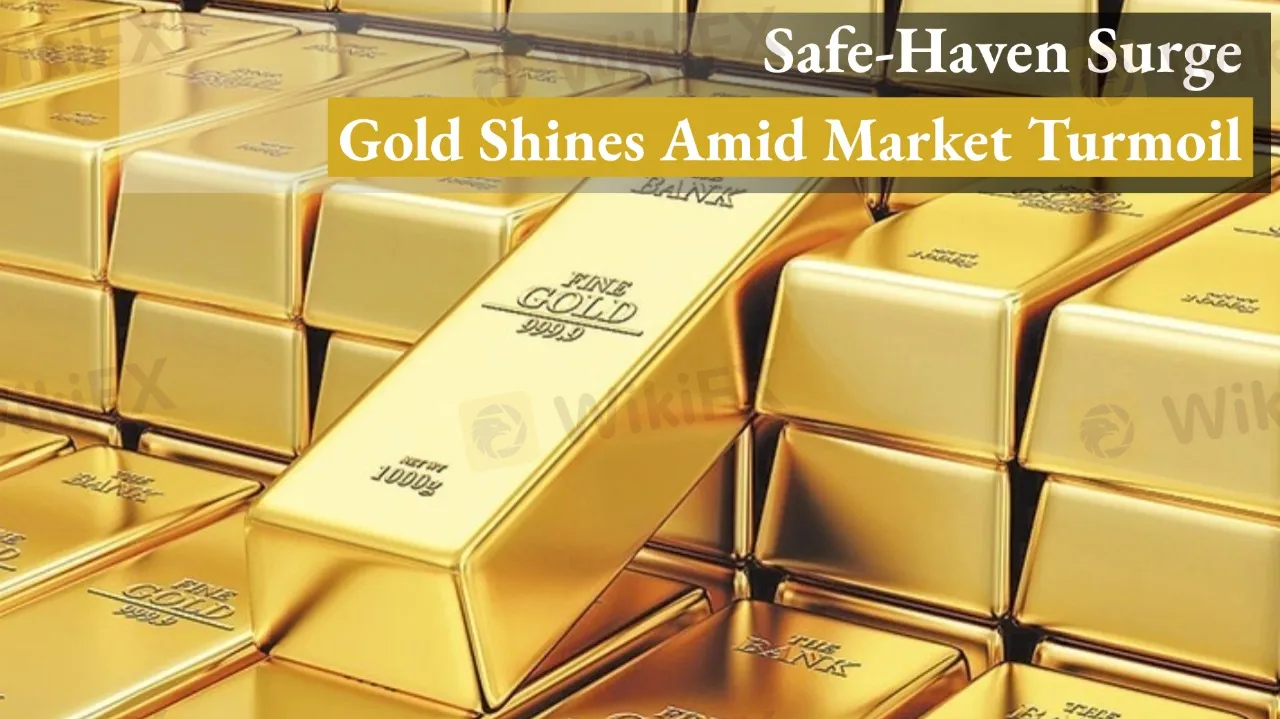
In recent days, gold prices have surged significantly, with spot gold breaking above $3,420 per ounce and briefly touching $3,432—marking a new high for the year. Fueled by growing geopolitical uncertainty, investors have poured into safe-haven assets, pushing gold prices higher for the third consecutive session.
From a technical standpoint, gold remains in a strong upward channel. Prices continue to trade above the 10-day and 20-day moving averages, and the MACD indicator shows bullish momentum. While the RSI approaches overbought territory, no clear reversal signals have emerged, suggesting buying interest remains strong. If gold breaches the $3,450 resistance level, it may soon challenge the $3,500 mark. On the downside, $3,380 serves as a key support.
Other precious metals have shown mixed performance: silver remains relatively flat, while platinum and palladium have experienced moderate declines. Despite a slight 0.2% rise in the Bloomberg Dollar Spot Index, gold remains largely unaffected and continues its strong run.
Why Gold Is Rising
Gold's recent rally is driven by a combination of factors rather than a single trigger.
First, geopolitical risk is the main catalyst. According to reports, a military strike targeted nuclear-related facilities in Iran, significantly escalating tensions in the Middle East. Such sudden events often trigger a surge in demand for safe-haven assets like gold.
Second, recent U.S. economic data has shown signs of weakness. The May Producer Price Index (PPI) rose only modestly, indicating contained inflationary pressure. Meanwhile, continuing jobless claims hit a multi-year high, signaling a softening labor market. These developments have strengthened market expectations that the Federal Reserve may ease monetary policy in the near term, weakening the U.S. dollar and further supporting gold prices.
Third, global central banks—particularly in Asia—have been increasing their gold reserves in response to currency volatility and financial uncertainty. This official demand has underpinned golds medium- to long-term value and boosted market confidence.
Future Market Challenges
Despite golds current strength, the broader financial landscape still faces a number of risks and uncertainties:
Escalating geopolitical risks: If regional tensions continue to intensify, global market volatility may increase, leading to more erratic asset behavior.
Policy ambiguity: Diverging expectations regarding interest rates in major economies could lead to shifts in monetary policy sentiment, affecting golds trajectory.
Sentiment-driven volatility: In a highly reactive market, short-term capital flows can reverse quickly. A drop in risk aversion could trigger gold price corrections.
Portfolio rebalancing pressures: Investors may later rotate out of gold and into bonds or other defensive assets depending on changes in market conditions.
Challenges for Investors
Although gold appears attractive, investors still face several operational challenges:
Increased volatility: Gold prices have become more sensitive to headlines and global events, raising the difficulty of timing entries and exits.
Technical resistance at high levels: With prices nearing potential resistance zones, profit-taking may intensify, putting latecomers at risk of short-term losses.
Complex market interpretation: The many factors affecting gold—from geopolitical risk to economic data—require sophisticated analysis, raising the barrier for individual investors.
Risk management complexity: In high-volatility environments, proper position sizing and stop-loss strategies become critical. Overleveraging or chasing the rally can expose investors to significant drawdowns.
Why Gold Is a Safe-Haven Asset
Gold has long been recognized as a premier safe-haven asset during times of uncertainty. Here are the main reasons why it consistently attracts investor interest in turbulent times:
Scarcity and intrinsic value
Gold is a rare, naturally occurring metal with limited annual production. Unlike fiat currencies, it cannot be printed at will, which makes its long-term value relatively stable and less prone to devaluation.
Non-credit-based nature
Gold does not rely on the creditworthiness of any country or institution. Unlike bonds or bank deposits, it carries no default risk, making it particularly appealing during periods of political instability or financial stress.
Inflation hedge
In inflationary environments where purchasing power declines, gold tends to rise in value. Its limited supply and historical role as a store of value make it an effective hedge against rising prices.
Inverse correlation with the dollar and interest rates
Gold often moves in the opposite direction of the U.S. dollar and interest rates. When the dollar weakens or rates fall, the opportunity cost of holding gold decreases, which in turn boosts demand.
Global liquidity and universal acceptance
Gold is one of the most liquid assets in the world. It is widely traded and accepted across borders, making it ideal for use in international portfolios and during cross-border capital flows.
Proven track record in crises
Historically, gold has performed well during major crises. Whether during the 2008 global financial meltdown or the 2020 pandemic shock, gold prices surged as investors sought safety.
In short, golds safe-haven status is not the result of market hype, but rather a product of its physical properties, historical precedent, and broad-based recognition. While it cannot eliminate all risk, it often provides portfolio protection during volatile and unpredictable market conditions.
Gold is currently benefiting from a powerful combination of geopolitical instability and potential monetary easing. However, investors must remain cautious. The situation in the Middle East is fluid, and markets are highly sensitive to new developments. In the weeks ahead, gold may remain volatile—but its role as a stabilizing asset in uncertain times remains intact. For those navigating todays turbulent markets, gold may not be the answer to everything, but it continues to be a time-tested pillar of safety.