Abstract:Recent allegations have cast a dark shadow over the trading platform KODDPA. Once positioned as a promising player in the broker industry, KODDPA now faces serious questions regarding its integrity and legitimacy. Multiple recent incidents—including widespread account disputes, claims of system hacking, and demands for users to pay taxes for fund withdrawals—suggest that the platform may be operating far from the transparent, regulated environment it purports to provide.
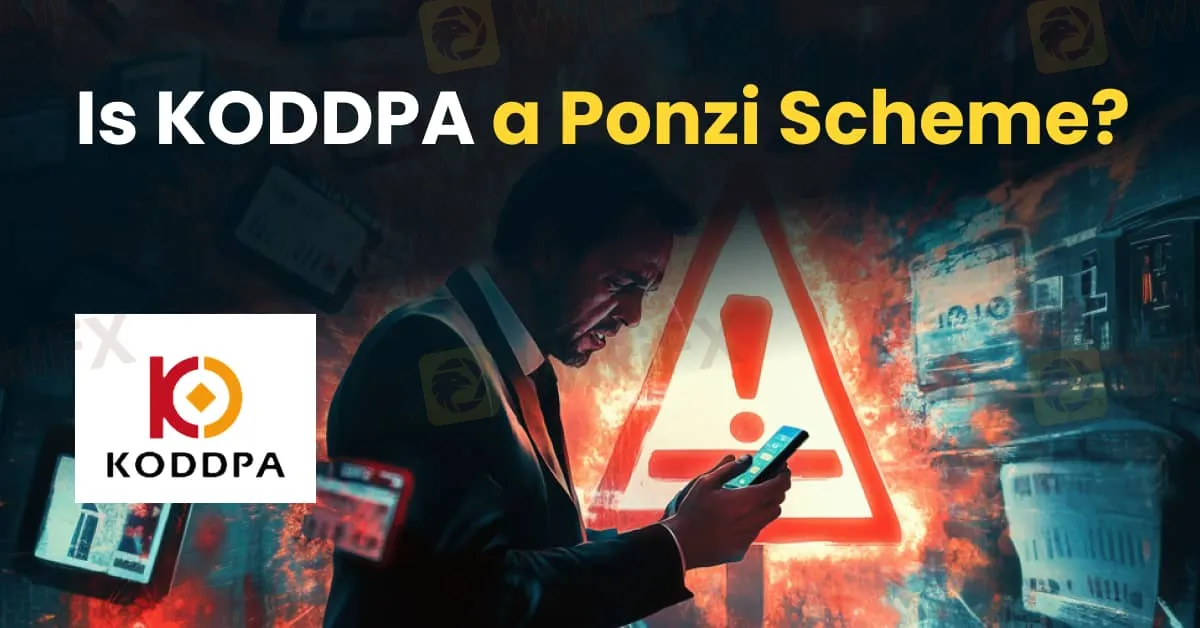
Recent allegations have cast a dark shadow over the trading platform KODDPA. Once positioned as a promising player in the broker industry, KODDPA now faces serious questions regarding its integrity and legitimacy. Multiple recent incidents—including widespread account disputes, claims of system hacking, and demands for users to pay taxes for fund withdrawals—suggest that the platform may be operating far from the transparent, regulated environment it purports to provide.
Troubling Transaction Disputes and Technical Failures
Users have reported that their accounts suddenly went to zero, with some claims stating that the platform‘s “system was hacked,” leading to unexplained resets of their balances. The platform’s response is even more concerning: instead of providing timely customer support or transparent explanations, KODDPA allegedly demanded that users pay a “tax” before being permitted to withdraw their funds. Such practices are not only atypical for a legitimate broker but also reminiscent of mechanisms employed by fraudulent schemes to extract additional money from already aggrieved investors.

Social Media Outcry: Accusations from Chilean Investors
The situation escalated on social media, where a significant number of users—particularly from Chile—have begun to voice their concerns. In a striking coincidence, two Chilean investors uploaded posts on the same day detailing their personal experiences and accusations against KODDPA.
- The first investor claimed that the platform initially hyped its imminent public listing—a promise that ended abruptly when the company seemingly “vanished,” leaving investors in limbo.
- The second investor went further by accusing KODDPA of outright stealing all the funds in his account.
Such testimonials have led many in online communities to label KODDPA as nothing more than a pyramid (or Ponzi) scheme. When allegations from multiple independent sources begin aligning on key issues, it becomes increasingly difficult to dismiss these claims as isolated incidents.
Regulatory Oversight and Operational Anomalies
Curiously, a query on a respected financial information website revealed that KODDPA has been in operation for anywhere between 2 to 5 years. The platform also appears to hold a FinCEN financial services license issued by the United States. However, this regulatory detail is undermined by several red flags:
- Trading Software and Operational Region: Despite its license, KODDPA does not appear to employ standard, reliable trading software. Additionally, there are serious doubts regarding its operational regions, casting uncertainty on the companys overall legitimacy.
- Website Inaccessibility: Further deepening the mystery, attempts to access information on the company through its primary websites (www.koddpa.com and koddpaglobal.cc) have been met with failure. The websites are currently inaccessible, a situation that raises serious concerns about the platforms transparency and ongoing operations.

Conclusion
The mounting evidence against KODDPA suggests a troubling possibility—that of a Ponzi or pyramid scheme disguised as a legitimate broker. While the companys possession of a FinCEN license might appear reassuring at first glance, the multitude of allegations regarding hacked accounts, forced payments for withdrawals, erratic online presence, and direct user accusations cannot be ignored. Investors should approach KODDPA with extreme caution, and regulatory bodies are encouraged to conduct a thorough investigation into these claims.
In summary, the dark cloud hovering over KODDPA serves as a reminder for investors to conduct diligent research and remain vigilant in an industry where not every promise is backed by verifiable trust or accountability.