JPMorgan CFO Sounds Alarm on Risky Stablecoin Yields
JPMorgan CFO warns high-return stablecoins could endanger financial stability as global regulators move toward tighter digital asset rules.
简体中文
繁體中文
English
Pусский
日本語
ภาษาไทย
Tiếng Việt
Bahasa Indonesia
Español
हिन्दी
Filippiiniläinen
Français
Deutsch
Português
Türkçe
한국어
العربية
Abstract:Boerse Stuttgart Digital secures Germany’s first MiCA license, enabling EU-wide operations and expanding its digital asset services.
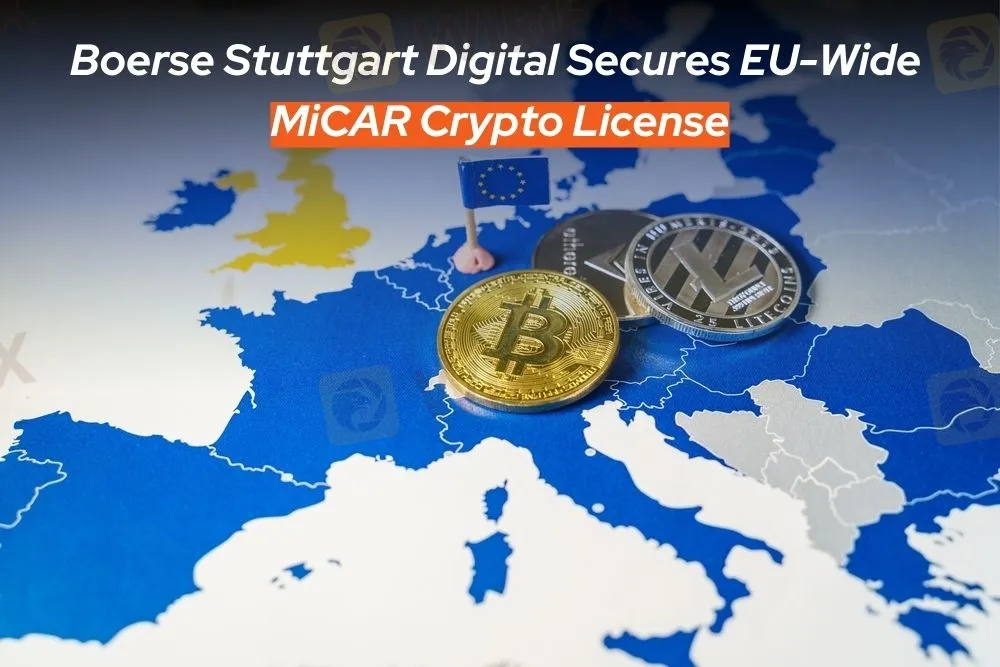
Boerse Stuttgart Digital, a subsidiary of Germany‘s second-largest stock exchange, recently became the first German entity to secure a crypto-asset service provider (CASP) license under the EU’s Markets in Crypto-Assets (MiCA) regulations. This license, awarded by the Federal Financial Supervisory Authority (BaFin), enables Boerse Stuttgart Digital to operate across all EU member states, marking a significant milestone in the companys journey towards digital asset expansion.
Regulatory Challenges and Breakthrough
The implementation of MiCA regulations across the EU aims to create a consistent framework for crypto-asset services. However, Germanys adoption faced delays due to political instability, including the collapse of the coalition government. This left legislative gaps, such as the formal designation of BaFin as the MiCA regulator. Just before the 2024 holiday season, the Bundestag passed the necessary laws, allowing BaFin to issue the CASP license.
Building on Institutional Ties and Expanding Offerings
A key factor in Boerse Stuttgart Digital‘s success is its collaboration with institutional partners like DZ Bank, Germany’s second-largest financial institution. This partnership supports the rollout of crypto services to 737 German community banks, with pilot projects already underway. The companys ability to bridge traditional banking and digital assets showcases its commitment to advancing the financial ecosystem.
According to Dr. Matthias Voelkel, CEO of Boerse Stuttgart Group, the company is working to develop integrated solutions for financial institutions across Europe. By building on its expertise, the firm aims to scale its operations while meeting the growing demand for secure and efficient digital asset services.

Disclaimer:
The views in this article only represent the author's personal views, and do not constitute investment advice on this platform. This platform does not guarantee the accuracy, completeness and timeliness of the information in the article, and will not be liable for any loss caused by the use of or reliance on the information in the article.

JPMorgan CFO warns high-return stablecoins could endanger financial stability as global regulators move toward tighter digital asset rules.

UbitMarkets review reveals no valid license and direct links to a fraudulent project, raising serious concerns over investor fund safety.

Is withdrawing capital from PaxForex too difficult for traders? Has the China-based forex broker made you trade gold, silver and cryptocurrencies despite not having an office in the United States? Do you find its operational style suspicious? You are not alone! Several traders have expressed these concerns when trading with the broker. In this PaxForex review article, we have exposed the broker through user comments made on several review platforms. Take a look!

When traders ask, "Is OneRoyal legit or a scam?" The answer isn't simply yes or no. OneRoyal is a trading company that has been running for almost twenty years and has important licenses from top financial authorities. This background puts it far away from typical quick scam operations. However, questions about whether it's trustworthy are reasonable and often come from its complicated business structure, the use of overseas companies, and a pattern of specific, serious complaints from users. This article aims to go beyond marketing claims and provide a fact-based analysis of OneRoyal's trustworthiness.