


Moneta Markets Receives UAE Category 5 Licence
Moneta Global Financial Services LLC has received a Category 5 licence from the UAE Capital Market Authority, establishing a regulated structure for the company’s activities in the country.
Original

简体中文
繁體中文
English
Pусский
日本語
ภาษาไทย
Tiếng Việt
Bahasa Indonesia
Español
हिन्दी
Filippiiniläinen
Français
Deutsch
Português
Türkçe
한국어
العربية
اردو




Abstract:TradeStation Securities fined $700K by FINRA for AML program failures from 2016-2022, highlighting the need for robust compliance in financial trading.
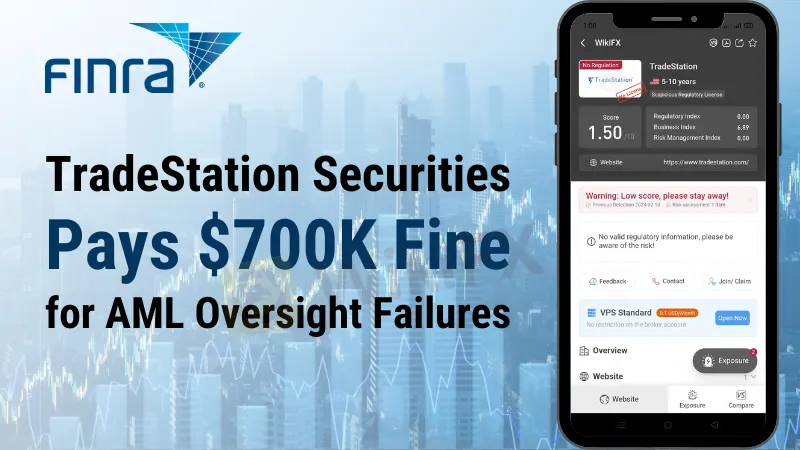
TradeStation Securities, Inc. agreed to pay a $700,000 fine after a settlement agreement with the Financial Industry Regulatory Authority (FINRA). The outcome of the decision is the comprehensive review of the firm's Anti-Money Laundering (AML) practices, which lasted from January 2016 to March 2022.
The main issue in this settlement was TradeStation's failure to design and properly run an AML program capable of detecting illicit trading activity by its clients. Initially, a third-party vendor's automated monitoring system relied heavily on the firm. Between 2016 and 2019, this algorithm generated over 100,000 transaction notifications, averaging 100 alerts each trading day. The enormous number of false positives among these warnings posed a considerable barrier to recognizing true suspicious actions.
The lack of workers designated to monitor these notifications exacerbated the issue. Only two to three compliance analysts, already overburdened with other responsibilities, were entrusted with reviewing these notifications. Their responses to the notifications varied with choices such as rejecting them without further action, giving cautions to customers, banning trading in certain assets, or even canceling customer accounts. However, a fundamental flaw in their methodology was the uneven documentation of their results and conclusions, which proved to be a crucial omission.
Recognizing the need for improvement, TradeStation switched vendors in 2019, seeking to achieve better outcomes. The new strategy reduced false positive alarms, making it more successful. Furthermore, in 2020, in tandem with its business expansion, the company increased its workforce by hiring three additional analysts to help with alert evaluations.

Despite these improvements, the firm's experts did not always flag possibly suspicious trades for additional inquiry. This contradiction was a major vulnerability in TradeStation's AML software. Annual independent AML testing reports in 2016 and 2017 have previously identified these flaws, underscoring the need for better documentation and monitoring of escalated concerns. However, it was not until March 2022 that the firm fully integrated these recommendations into its systems.
TradeStation violated many FINRA standards by failing to consistently escalate certain potentially suspicious trading operations for inspection and by failing to have a well-designed process in place to oversee the evaluation and resolution of alarms. The business specifically breached Rule 3310(a), which governs the implementation of AML systems, as well as Rule 2010, which governs the maintenance of high standards of commercial honor and equitable trading practices. The company also violated FINRA Rule 3110 by failing to create written supervisory procedures (WSPs) for accepting and reselling low-priced securities.
As a result of these findings, TradeStation has accepted a reprimand as well as a substantial $700,000 punishment. This episode emphasizes the vital need for comprehensive and timely AML processes in the financial industry. The intricacies and changing nature of financial trading require ongoing monitoring and agility in compliance processes.
TradeStation's case serves as a strong reminder to other financial institutions of the necessity of complying with regulatory requirements and the need for continual improvements in their AML procedures to maintain the integrity of financial markets and prevent illegal activity.
For more details on this story and daily updates on financial market news, visit WikiFX's news section at https://www.wikifx.com/en/news.html. Stay informed!

Disclaimer:
The views in this article only represent the author's personal views, and do not constitute investment advice on this platform. This platform does not guarantee the accuracy, completeness and timeliness of the information in the article, and will not be liable for any loss caused by the use of or reliance on the information in the article.

Moneta Global Financial Services LLC has received a Category 5 licence from the UAE Capital Market Authority, establishing a regulated structure for the company’s activities in the country.

RBI's concessional forex swap facility had mobilised $40.82 billion by 31 July 2026, with FCNR(B) deposits providing $36.725 billion of the total. This India-focused analysis separates confirmed inflows from the $80–85 billion SBI Research projection, compares the 2026 programme with the 2013 FCNR(B) window, and explains what the numbers can—and cannot—do for the Indian rupee. It also shows how banks, NRI depositors, importers, exporters and institutional investors may be affected, while highlighting the oil, dollar, maturity and hedging risks that still matter for USD/INR and forex trading in India.
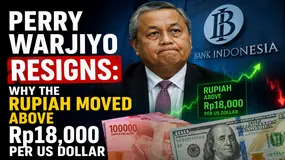
Perry Warjiyo resigned as Bank Indonesia governor, Destry Damayanti became acting governor, and the rupiah traded above Rp18,000. Here is what forex traders should monitor next.
The visible fee in an MT4 white label proposal is rarely the real cost of operating it. For an existing broker, the decision is not simply whether an MT4 white label platform is “cheap” or “expensive.” The real question is whether the commercial model remains viable after integration, support, data, client migration, compliance, and exit costs are included. That is why an MT4 white label cost review should be built as a 24- to 36-month operating case. It should compare three credible choices: 1. Keep the present MT4 setup and improve its weakest controls. 2. Replace the MT4 white label provider but retain the client proposition. 3. Migrate selected clients or products to another platform while running MT4 in parallel. This guide explains how to build that case without relying on headline prices or generic vendor claims.
WikiFXWikiFXWikiFXWikiFXWikiFXWikiFXWikiFXWikiFXWikiFXWikiFX