Abstract:Breaking News: IMF Official Alerts of Emerging Cold War II Risk Between US and China, Impacts Global Trade and Alliances.
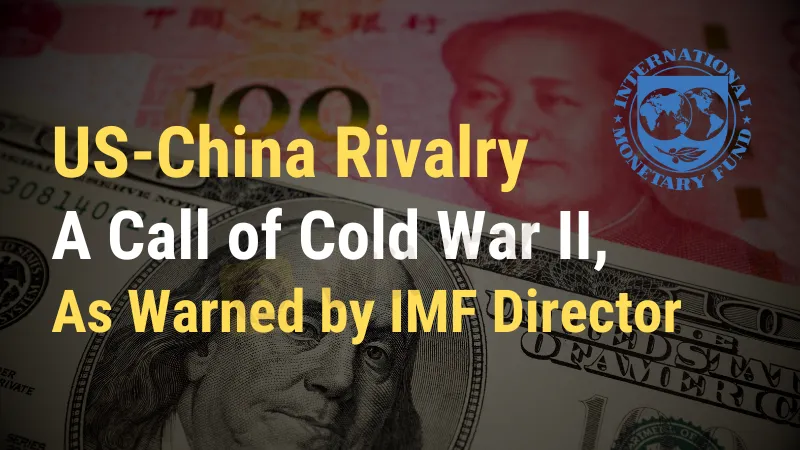
The International Monetary Fund (IMF) has sounded an alarm about the rising rivalry between the United States and China, warning of the probable commencement of a second Cold War in a crucial pronouncement that might redefine global geopolitics. During her recent address at the 20th World Congress of the International Economic Association in Colombia, Gita Gopinath, the IMF's First Deputy Managing Director, underscored this rising worry.

Addressing the esteemed congregation at the 20th World Congress of the International Economic Association in Colombia, Gopinath spoke of our time as a pivotal juncture. She pondered the brink of a new Cold War, drawing upon the wisdom of historian Niall Ferguson, who posits that this ominous chapter has already commenced. In her discourse, she delineated the parallels and differences between the erstwhile Cold War and the present scenario, stating:
“In the Cold War, it was the U.S. and the Soviet Union; now it is the U.S. and China. But the stage on which these forces are unleashed is fundamentally different along several dimensions.”
Gopinath highlighted the heightened economic interdependence of nations in today's world, a stark contrast to the era of the first Cold War. She pointed out that global trade to GDP now stands at 60 percent, a significant increase from the 24 percent during the earlier Cold War, signifying the potential high costs of fragmentation. Moreover, the uncertainty of alliances, owing to fluctuating political ideologies within countries, adds to the complexity of the current geopolitical landscape.
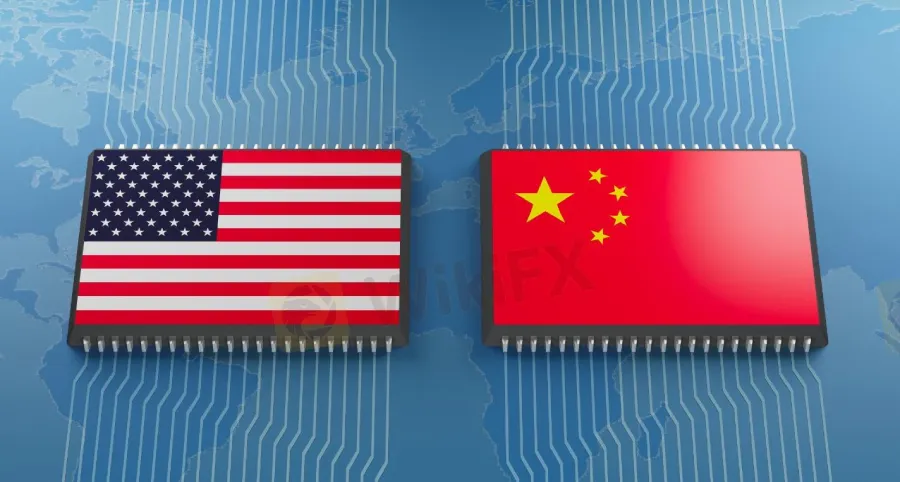
The IMF official opined on the dire consequences of descending into a new Cold War. She cautioned against the annihilation of the gains from open trade, underscoring the imperative for policymakers to champion a multilateral rules-based trading system and the institutions that bolster it.
While acknowledging that there is no widespread retreat from globalization, Gopinath warned of the emerging fault lines and the increasing reality of geoeconomic fragmentation. She proclaimed:
“If fragmentation deepens, we could find ourselves in a new Cold War.”
The economic repercussions of Cold War II could be monumental, given the intricate integration of the global economy. Gopinath emphasized that the common challenges faced by the world today cannot be surmounted in a fragmented world. She pointed out that while some countries might initially benefit from fragmentation, all would suffer in the throes of a full-blown Cold War.
The Bottom Line
The specter of Cold War II looms large, threatening to unravel the fabric of global economic cooperation and peace. The words of Gita Gopinath serve as a solemn reminder of the precarious path we tread. It behooves us, as denizens of this interconnected world, to heed these warnings and work towards fostering unity and cooperation.
For those who seek further enlightenment and understanding of these complex economic dynamics, a visit to https://www.wikifx.com/en is most advisable. Here, one may delve deeper into the intricacies of global economic trends and the pivotal role of international financial institutions in navigating these tumultuous times.