Abstract:The Australian Securities and Investments Commission (ASIC) has determined that Interactive Brokers displayed negligence in identifying and preventing suspicious trading by one of its clients, raising concerns about the discount brokerage's compliance with financial regulations.
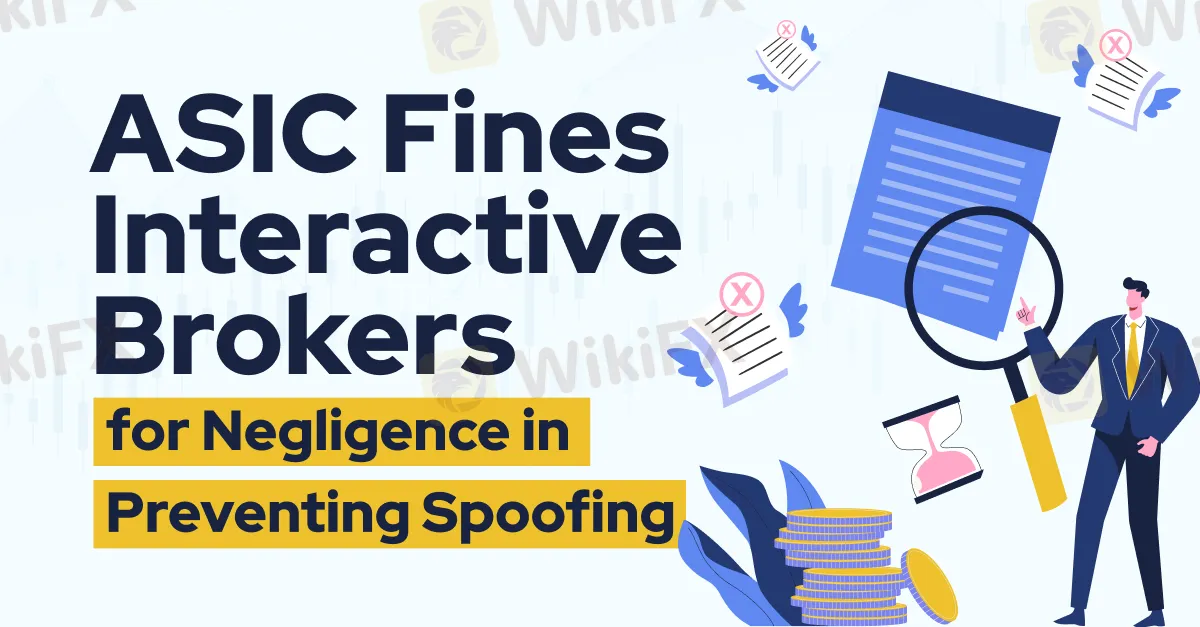
The Australian Securities and Investments Commission (ASIC) has recently determined that Interactive Brokers exhibited negligence by failing to detect suspicious trading activity that one of its clients conducted. Furthermore, the regulatory body found that Interactive Brokers displayed recklessness by permitting these suspicious transactions to persist, even after ASIC had raised concerns. ASIC's investigation also revealed that the discount brokerage firm did not maintain the requisite resources to ensure compliance with prevailing financial regulations.

Background of Interactive Brokers:
Interactive Brokers (IB) is a multinational online brokerage firm that offers a wide range of trading products and services to individual investors, professional traders, institutions, and hedge funds. IB is known for its low trading commissions, advanced trading tools, and target="_blank" kwlink="6384064000816950219725">target="_blank" kwlink="6384064003130850863043">global reach.
IB offers trading in stocks, options, futures, currencies, bonds, funds, and cryptocurrencies on over 150 markets worldwide. The company also provides margin lending, short selling, and other investment services.
IB's flagship trading platform is Trader Workstation (TWS), which is a powerful and customizable platform that offers a wide range of trading tools and features. IB also offers a mobile trading app and a web-based trading platform.
IB is a well-respected and regulated brokerage firm with a strong track record of financial stability. The company is headquartered in Greenwich, Connecticut and has offices in over a dozen countries.

A statement issued by ASIC emphasized that market participants bear a critical responsibility as gatekeepers in identifying and preventing suspicious trading activities. They must establish effective controls and allocate sufficient resources to identify and disrupt potential market misconduct promptly. Furthermore, they must respond swiftly to any concerns brought to their attention by ASIC.
Specifically, ASIC's scrutiny focused on a series of Closing Single Price Auction (CSPA) orders executed by an experienced trader client on the ASX between March 10 and November 5, 2021. The Market Disciplinary Panel (MDP) determined that Interactive Brokers should have been vigilant regarding the suspicious nature of these orders. Several factors, including the timing, low volume and value of the orders, their impact on the price of OCC shares, and their inconsistency with the client's prior trading history, should have raised red flags.
The MDP's investigation ultimately concluded that Interactive Brokers had allowed its client to place these orders to manipulate the closing price of OCC shares. The trader employed a deceptive tactic by entering orders he never intended to execute, creating a false signal that deceived competitors and influenced market movements. Subsequently, he promptly cancelled these misleading orders and executed actual trades in the opposite direction, as alleged in the complaint.
Despite receiving alerts from ASIC, Interactive Brokers failed to take appropriate action and allowed the client to continue trading suspiciously. In light of these deficiencies, ASIC deemed Interactive Brokers' response inadequate and identified a shortage of staff possessing the requisite skills and supervision.
As a result of these findings, Interactive Brokers has been directed to pay a penalty, although it has not admitted guilt or liability in this matter.
Earlier in March, ASIC had temporarily suspended Interactive Brokers' stock lending products, known as 'SYEP Derivatives.' These products enable retail investors to lend their securities to the broker, who typically lends them to other parties for short selling. ASIC's action was prompted by concerns that Interactive Brokers had included investors in the target market who did not align with the product's characteristics and associated risks.