


FOMC Minutes Today: 3 USD and Gold Scenarios Traders Should Prepare For
The Fed releases the July FOMC minutes on 19 August 2026. Here are three USD and gold scenarios, confirmation signals, and a practical risk checklist for traders.
Original

简体中文
繁體中文
English
Pусский
日本語
ภาษาไทย
Tiếng Việt
Bahasa Indonesia
Español
हिन्दी
Filippiiniläinen
Français
Deutsch
Português
Türkçe
한국어
العربية
اردو




Abstract:Bastion Capital London Limited (in liquidation) has been fined £2,452,700 by the Financial Conduct Authority (FCA) due to serious financial crime control failures related to cum-ex trading. The company neglected to effectively manage the risk of being involved in fraudulent trading and money laundering activities.
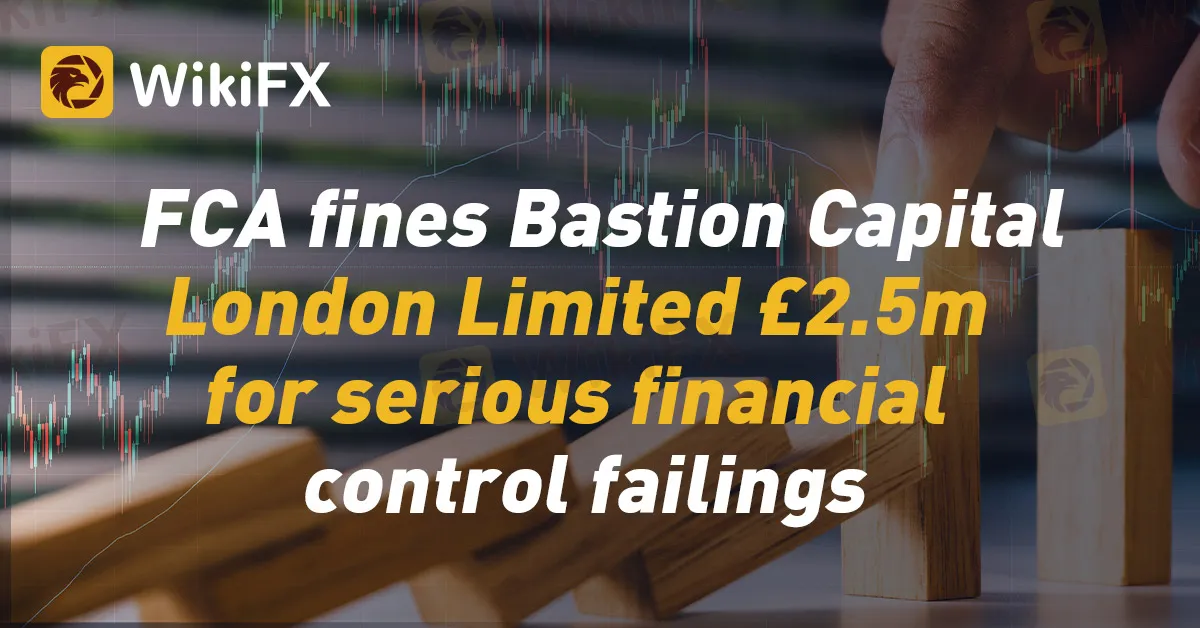
Bastion Capital London Limited (in liquidation) has been fined £2,452,700 by the Financial Conduct Authority (FCA) due to serious financial crime control failures related to cum-ex trading. The company neglected to effectively manage the risk of being involved in fraudulent trading and money laundering activities.
During the period between January 2014 and September 2015, Bastion executed trades amounting to approximately £49 billion in Danish equities and £22.5 billion in Belgian equities on behalf of clients from the Solo Group. These trades were conducted in a manner that strongly indicated involvement in financial crime. It appears that the purpose of these trades was to facilitate withholding tax reclaims in Denmark and Belgium. Bastion received a commission of £1.55 million, a significant portion of the firm's revenue during that period.
Moreover, Bastion carried out a series of trades on behalf of 11 Solo Clients within a four-day period. These clients then executed opposite positions shortly after, but at significantly different prices. As a result, one Solo client, Ganymede Cayman Ltd (an entity fully owned by the Solo Group's controller), incurred a loss of €22.7 million, while the remaining 10 Solo Clients benefited from this arrangement.
Bastion either ignored or failed to notice several warning signs associated with these trades, which lacked any apparent economic purpose except for transferring funds from the Solo Group's controller to business associates. Bastion should have assessed the financial crime risks when onboarding these Solo Clients and when executing the trades.
Steve Smart, Joint Executive Director of Enforcement and Market Oversight, stated, “Bastion earned substantial fees by executing trades on behalf of the Solo Group that ultimately aimed to make illegitimate tax reclaims from the Danish and Belgian authorities. They failed to identify clear indicators that should have alerted them to the risk of involvement in financial crime. It is crucial for firms to effectively manage these risks.”
This case marks the fifth instance where the FCA has taken action regarding cum-ex trading and forms part of the FCA's broader efforts to address cum-ex dividend arbitrage cases and withholding tax (WHT) schemes. The FCA has actively collaborated with global law enforcement authorities in this regard. The fines imposed by the FCA on firms involved in this trading have surpassed £20 million, considering that these firms earned over £7 million in fees.
As Bastion did not dispute the FCA's findings and agreed to settle, it qualified for a 30% discount under the FCA's Settlement Discount Scheme.

Disclaimer:
The views in this article only represent the author's personal views, and do not constitute investment advice on this platform. This platform does not guarantee the accuracy, completeness and timeliness of the information in the article, and will not be liable for any loss caused by the use of or reliance on the information in the article.
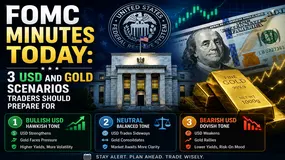
The Fed releases the July FOMC minutes on 19 August 2026. Here are three USD and gold scenarios, confirmation signals, and a practical risk checklist for traders.

A Prime of Prime forex arrangement can help a broker access trading relationships, credit intermediation, technology connectivity, and liquidity aggregation that may otherwise be difficult to obtain directly. But the label does not prove direct bank access, executable depth, or a particular execution outcome. This 2026 guide explains what a forex Prime of Prime, PoP liquidity provider, prime brokerage forex service, and forex prime broker proposal can mean in practice; where the credit and order-routing chain must be documented; how to test pricing, limits, rejects, records, and resilience; and which commercial terms create hidden operating cost. Use the comparison framework, red-flag list, and 90-day launch plan to assess fit for your client mix and risk model. The objective is a controllable execution dependency with traceable evidence, not a marketing claim about institutional access.
FINEX review 2026 for readers comparing an Indonesia forex broker: understand what Bappebti's A+++ rating does and does not show, then check floating spreads, withdrawals, segregated accounts and the complaint route for PT Finex Bisnis Solusi Futures.

Choosing a forex liquidity provider is not a search for the lowest displayed spread or the longest provider list. It is a broker decision about pricing integrity, depth, routing, credit, reporting, incident response, and client communication. This 2026 guide explains how a forex LP, FX liquidity provider, or liquidity provider forex arrangement fits into a broker’s execution chain; what to test before onboarding; why a “best forex liquidity provider” claim cannot replace due diligence; and how to compare cost beyond commission. Use the execution-quality scorecard, provider questions, routing scenarios, and 90-day onboarding plan to assess whether a liquidity relationship can support your actual client mix, instruments, risk model, and jurisdiction. The goal is not to make a universal ranking. It is to build evidence that your broker can explain, supervise, reconcile, and recover its execution service when market conditions are difficult.
WikiFXWikiFXWikiFXWikiFXWikiFXWikiFXWikiFXWikiFXWikiFXWikiFX