Abstract:This article provides an in-depth exploration of advanced trading, covering technical and fundamental analysis, algorithmic and high-frequency trading, risk management, quantitative and behavioral finance, trading psychology, market structure, intermarket analysis, and performance analysis. It emphasizes continual learning and adaptability for successful trading.
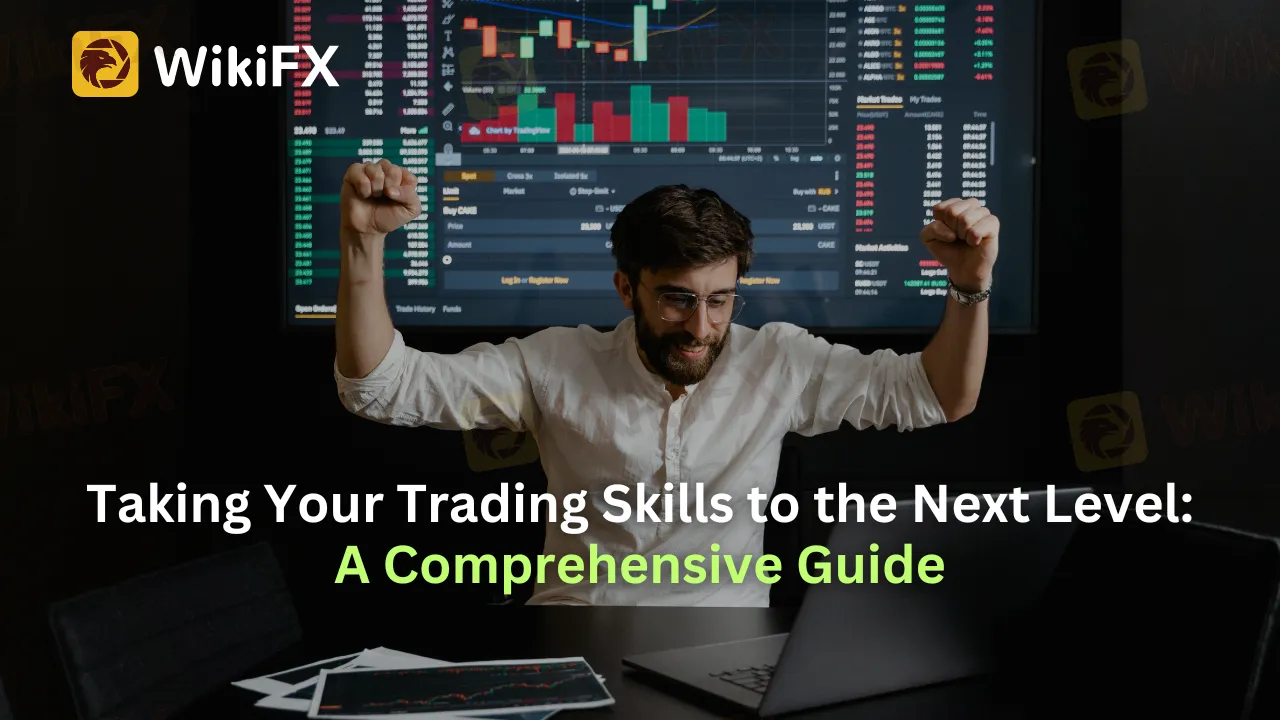
The financial markets are a dynamic, ever-changing landscape. They require a diverse range of skills and disciplines to navigate effectively, particularly for those looking to trade at an advanced level. This article will explore several key topics and provide insights on how to level up your trading skills.
 Contents
Advanced Technical Analysis
Technical analysis is a cornerstone of successful trading. It uses historical price patterns and statistical indicators to predict future market movements. The advanced technical analysis goes beyond basic patterns and indicators, incorporating more sophisticated tools such as Elliott Wave Theory, Ichimoku Clouds, and Fibonacci retracements. It involves understanding complex chart patterns, interrelations between different technical indicators, and managing false signals.
Algorithmic Trading
Algorithmic trading involves using computer programs to execute trades based on predefined criteria. It can significantly improve trading efficiency by eliminating human errors and emotional biases. Advanced algorithmic trading involves creating and backtesting complex trading strategies, using machine learning to adapt to changing market conditions, and managing the technical risks associated with high-speed trading systems.
High-Frequency Trading Strategies
High-Frequency Trading (HFT) involves executing trades in milliseconds using advanced algorithms. It requires substantial infrastructure, including high-speed data connections and proximity to exchanges. The strategies revolve around arbitrage, market-making, and statistical arbitrage. Despite the potential for high profits, HFT poses significant risks, including flash crashes and systemic instability.
Risk Management
Risk management is crucial in trading. Advanced risk management involves not just setting stop-loss orders, but understanding the statistical properties of your trading portfolio, such as Value-at-Risk (VaR) and Conditional Value-at-Risk (CVaR). It's about managing portfolio diversification, exposure to systemic risk, and tail risk – the risk of extreme market events.
Advanced Fundamental Analysis
Fundamental analysis involves evaluating a security's intrinsic value by examining related economic, financial, and other qualitative and quantitative factors. Advanced fundamental analysis includes understanding the implications of macroeconomic policies, interpreting complex financial statements, and assessing management quality and corporate governance. It can also involve using models like Discounted Cash Flow (DCF) to estimate intrinsic value.

Quantitative Analysis
Quantitative analysis uses mathematical and statistical modeling to understand and predict market behavior. It is a vital component of algorithmic trading and risk management. Advanced quantitative analysis involves understanding stochastic calculus, time-series analysis, and machine learning. It requires a strong foundation in mathematics and programming.
Behavioral Finance
Behavioral finance studies the effects of psychological factors on the financial markets. It helps to understand why markets may not always act efficiently. Advanced knowledge involves understanding cognitive biases like overconfidence and loss aversion, herd behavior in financial markets, and using this knowledge to better predict market movements.
Trading Psychology
Trading psychology refers to the emotions and mental state that affect trading success. It involves managing fear and greed, maintaining discipline, and dealing with losses. Advanced trading psychology is about developing mental resilience, understanding your own psychological biases, and using techniques like mindfulness to improve trading performance.
Market Structure and Microstructure
Market structure refers to the way a market is organized, including the number of participants, their roles, and the trading rules. Microstructure delves into the specifics of how trades occur and how prices are set. Understanding this can provide insights into liquidity, transaction costs, and price discovery, which can help refine trading strategies.
Intermarket Analysis
The Intermarket analysis involves examining the correlations between different asset classes, such as stocks, bonds, commodities, and currencies. It provides a more holistic view of the markets, which can help identify new trading opportunities and manage risk. For instance, a rise in oil prices may affect the stock prices of energy companies and the value of the dollar.
Performance Analysis
Performance analysis involves evaluating the effectiveness of your trading strategies over time. This is not just about calculating returns, but also about understanding risk-adjusted performance measures such as the Sharpe Ratio and the Sortino Ratio. The advanced performance analysis involves backtesting strategies on historical data, forward testing on out-of-sample data, and using Monte Carlo simulations to estimate the risk of different outcomes.
In conclusion, mastering the art of trading involves more than just understanding charts or financial news. It requires a comprehensive understanding of various disciplines, including technical and fundamental analysis, quantitative methods, psychology, and market structures. Each trader may find a unique combination of these skills and knowledge areas that work best for them. Ultimately, successful trading is about continual learning, disciplined risk management, and the ability to adapt to an ever-changing market environment.
Download and install the WikiFX App on your smartphone to stay updated on the latest news.
Download the App here: https://social1.onelink.me/QgET/px2b7i8n