

عالمی بروکر ریگولیشن چیک کرنے والا ایپ
WikiFX
اردو
简体中文
繁體中文
English
Pусский
日本語
ภาษาไทย
Tiếng Việt
Bahasa Indonesia
Español
हिन्दी
Filippiiniläinen
Français
Deutsch
Português
Türkçe
한국어
العربية
اردو


OANDA Review 2026: Regulation, Complaints, and Clone Risks

WikiFX
|


خلاصہ۔:Available records show OANDA is a highly regulated global broker, but a recent flood of user complaints highlights an extreme risk of offshore clone scams impersonating the brand. Indian traders must strictly verify the official domain to avoid severe withdrawal traps and fake VIP upgrade fees.
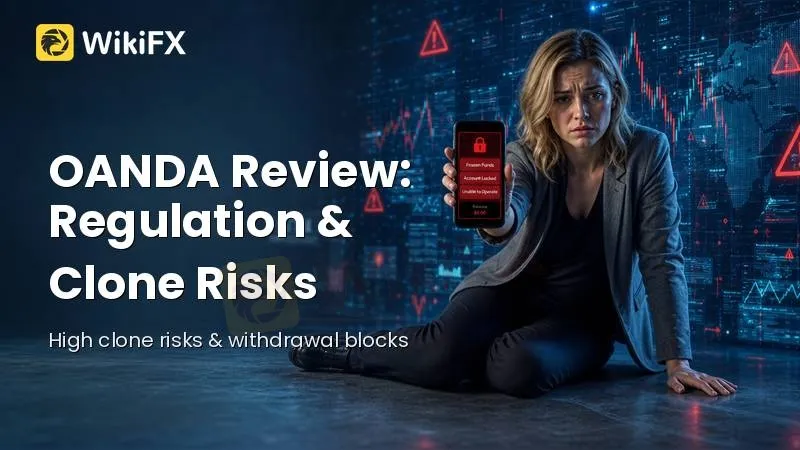
Available records show OANDA is a highly regulated global broker, but recent data reveals a massive wave of clone scams targeting retail traders under its name. While the official entity holds top-tier licenses, user complaints highlight severe withdrawal blocks and “VIP upgrade” frauds tied to fake websites. Indian traders must verify the official domain before creating an account or depositing funds.
In this OANDA review, the main question is not whether the official company is established, but whether traders can safely navigate the severe clone risks surrounding the brand. For anyone comparing Forex conditions, separating the actual regulated OANDA broker from fraudulent impersonators is the most critical step.
 فہرست
فہرستOANDA Regulation and Safety
The official OANDA entity holds strong regulatory licenses across multiple major jurisdictions. Available WikiFX data shows the broker is overseen by top-tier authorities, including:
- ASIC (Australia)
- FCA (United Kingdom)
- NFA (United States)
- MAS (Singapore)
- FSA (Japan)
- CIRO (Canada)
- FSC (Virgin Islands - Offshore)
While this OANDA regulation profile is among the strongest in the industry, regulatory history is not perfectly spotless. In April 2021, the US NFA fined OANDA Corporation $200,000 for failing to submit accurate daily foreign exchange reports and lacking proper supervision. Despite this, the presence of these active licenses means legitimate users have formal dispute resolution channels—a fundamental protection that Indian traders should value.
WikiFX Score and High-Risk Signals
Despite its heavy regulation, OANDA prominently displays a remarkably low WikiFX score of 1.79. This drastically reduced rating is driven by an alarming volume of user exposures—over 103 complaints recorded in just three months.
When a historically regulated broker shows such a high volume of recent fraud complaints, it often points to coordinated clone scams. Fraudsters build imitation websites, intercept deposits, and refuse withdrawals, completely bypassing the real broker's regulatory protections and ruining the brand's safety score.
Platform Access and OANDA Login Safety
The official broker provides market access through MT4, MT5, and proprietary web, desktop, and mobile platforms.
However, user reports highlight extremely dangerous clone domains operating globally. Victims have reported being defrauded through fake websites such as `www.oanda19.com`, `app.oandaforgroup.com`, `Oanda-vip.com`, and `options-usd.com`.
Before utilizing any OANDA login page, Indian traders must ensure they are on the official domain. Scammers frequently use encrypted chat groups like Telegram or Zalo to lure traders into downloading fake trading apps that visually mimic the real platform.
Trader Complaints: Withdrawals and Platform Slippage
The provided user cases reveal two distinctly different types of trading experiences, further confirming the divide between the real broker and its malicious clones.
Clone Scam Allegations (Severe Risk):
Numerous retail traders report catastrophic withdrawal failures after being lured by “teachers” or “assistants” in private chat groups.
- Users trying to withdraw funds are summarily blocked and asked to pay 20% to 25% “tax”.
- Others are told their accounts are locked and they must pay exorbitant “VIP upgrade” fees (ranging from $1,800 to $24,000) or a 50% margin deposit just to release their funds.
- These are textbook scam tactics executed by impersonators, not standard practices for an NFA-regulated broker.
Official Broker Feedback (Trading Conditions):
Users who appear to be trading on the real platform have different, practical concerns. A trader in Japan reported severe, abnormal slippage on an AUD/JPY trade, claiming they were stopped out significantly above the market peak. Other users praised the platform's stability and TradingView integration, but noted that customer support can be sluggish, fund processing can be slow, and overall trading spreads or fees may be slightly higher than those of competitors.
Final Verdict: Should Indian Traders Trust OANDA?
The official OANDA is a legitimate, heavily regulated global entity. However, the current risk level for retail traders is abnormally high due to the overwhelming presence of clone scams operating under the OANDA name.
If you are trading with the verified, officially licensed entity, the risks are generally limited to standard market volatility, occasional slippage, and slower support times. But if you click a promotional link in a chat group and register on an unverified domain, the risk of total capital loss is massive.
Status changes daily. Before depositing, check the WikiFX App for the latest real-time certificate and broker risk updates.
ڈس کلیمر:
یہ مضمون صرف مصنف کی ذاتی رائے پر مبنی ہے، یہ پلیٹ فارم کی سرمایہ کاری کی مشورہ نہیں ہے۔ پلیٹ فارم مضمون کی معلومات کی درستگی، مکملیت اور بروقت ہونے کی کوئی ضمانت نہیں دیتا، اور مضمون کی معلومات پر اعتماد یا استعمال سے ہونے والے کسی بھی نقصان کی ذمہ داری قبول نہیں کرتا۔
